
Service
Garage Door Roller Replacement, Liberty MO
Worn rollers on Liberty's 1960s-90s garage doors bind and jump track in cold weather. Here's what fails, why, and what a roller job actually involves.
- Licensed & Insured
- Same-Area Service Calls
- Upfront Pricing
What Happens When You Call
-
1
Call or Request a Quote
Tell us what the door is doing and roughly how old the house is - that alone points us toward the likely part before a truck leaves.
-
2
On-Site Diagnosis
A tech checks the spring, cables, tracks, and opener in person and tells you plainly what is actually wrong.
-
3
Straight Price, No Surprises
You get a number before any work starts. It covers parts and labor, nothing added after the fact.
-
4
Fixed the Same Visit
Most repairs are done in one trip. If a part needs sourcing, we tell you that upfront instead of guessing.
How Long You Are Without the Door
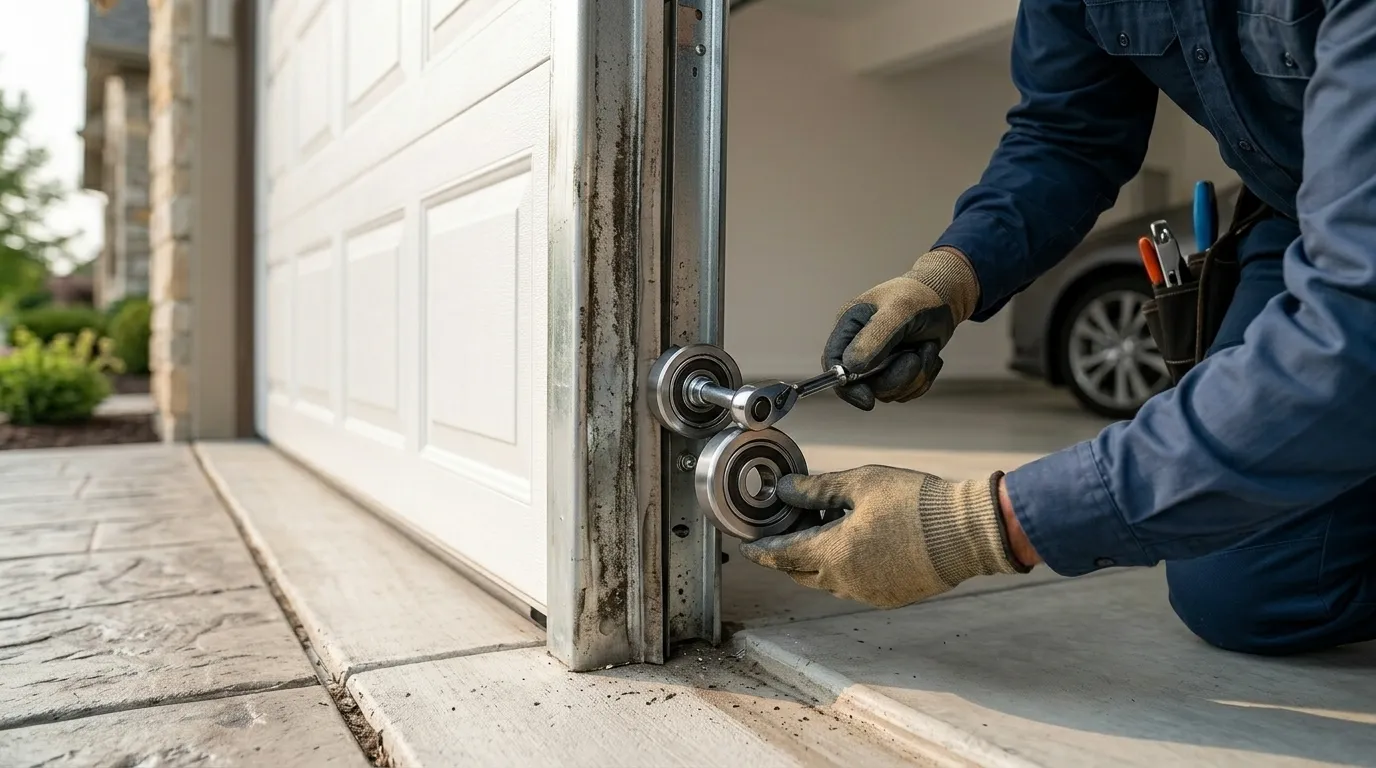
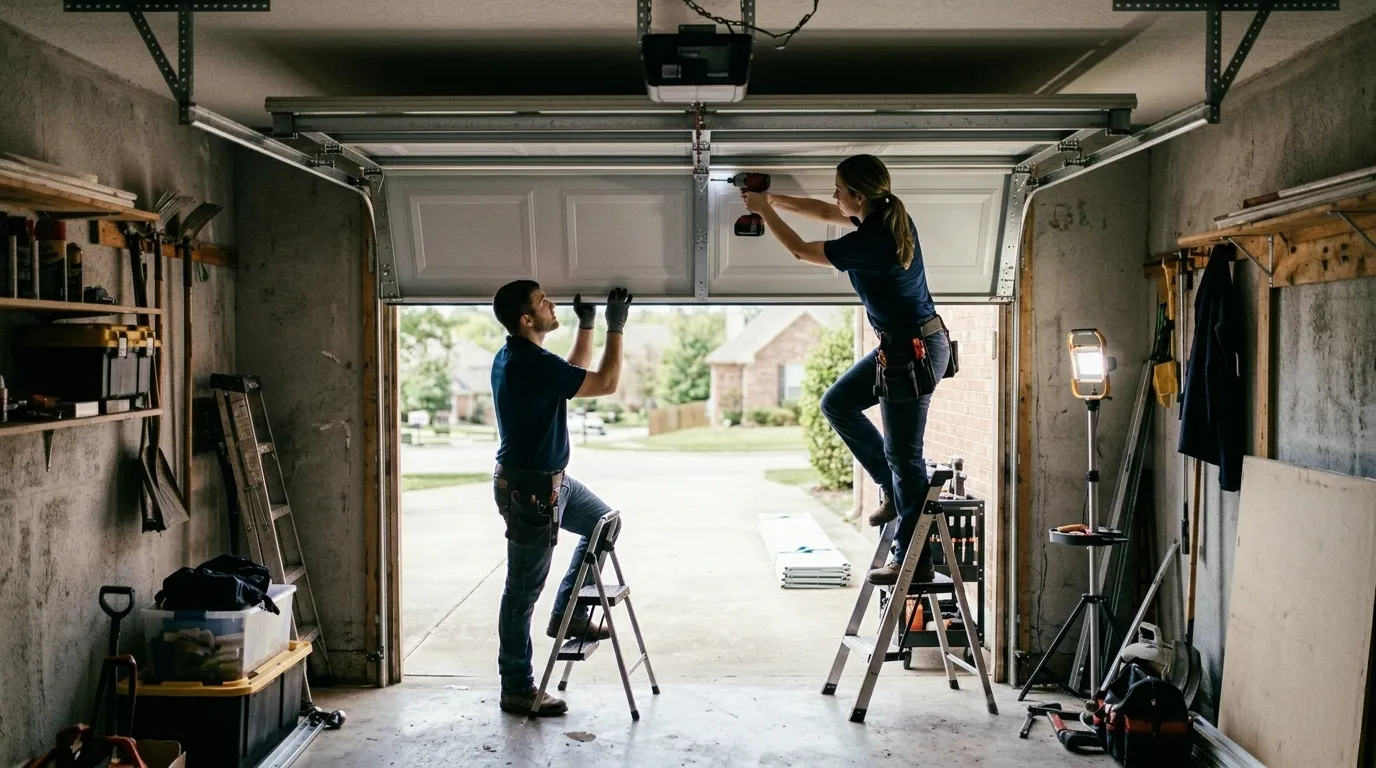
A roller swap on a standard double or single door is a same-visit job once a truck is on site with the right roller size and a spare cable or two if the old rollers have chewed up the track. You're not waiting on a special-order panel or a spring the way you would with a full replacement - rollers are stock parts. The door goes up and down while the work happens; each section gets pulled, the roller pin comes out, the new roller goes in, and the section goes back on the track.
For most homes in the Liberty service area, that means the door is back in normal use the same afternoon, not sitting open or shut for days. The one thing that stretches a job is when a track has been bent by a roller that jumped it - straightening or replacing a section of track adds time, and on a badly bent track it can mean the door stays down until that's sorted, since running it on a warped track just repeats the failure.
The Symptom
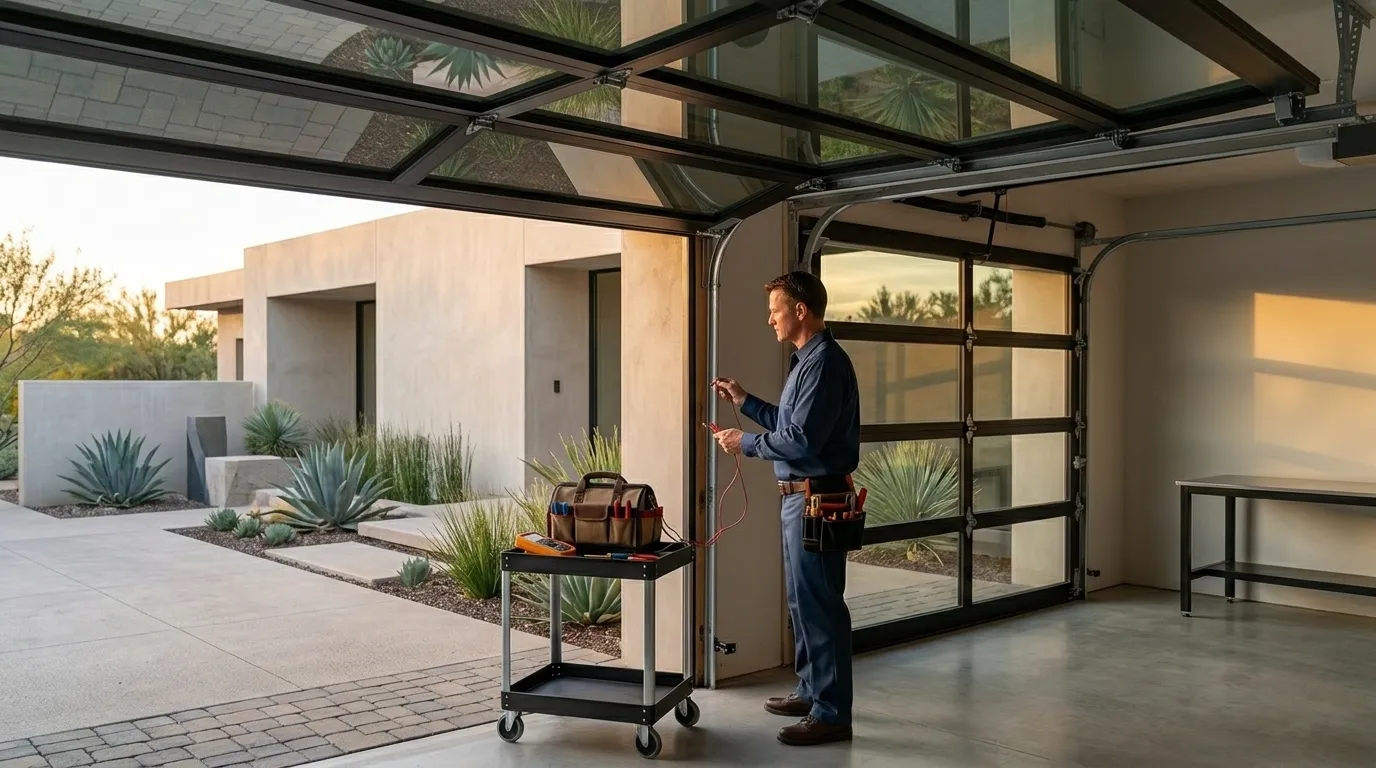
You hear it before you see it: a grinding or clicking that starts at one point in the door's travel and gets louder every week. Then the door starts to hesitate at that spot, or jump slightly in the track. Left alone, a cracked or flat-spotted roller starts chewing the inside edge of the track, and eventually it jumps the track entirely - usually with the door half open, which is the worst possible place for it to happen.
Nylon rollers tend to crack quietly and fail without warning; steel rollers on older doors grind loudly for months before they finally seize. Either way, the fix is the same: pull the worn rollers and put in new ones before they take the track with them.
Why This Fails Locally
Liberty's housing stock runs mostly 1951 through 2002, with the bulk of it built in the 1960s and '70s across the area's older neighborhoods. Doors and roller sets on houses from that era have had decades of cycles - most of these homes are on their second or third roller set already, often steel rollers on steel track from an earlier repair rather than the nylon rollers that ship standard now. That matters here specifically because Liberty sits in a cold, moderate climate band: steel rollers contract in freezing temperatures and lose the little bit of give that keeps them turning smoothly in the track, so a roller that was merely noisy in October starts binding hard by January.
Grease that's fine in summer thickens up in the cold and stops doing its job right when the metal-on-metal wear is at its worst. That combination - older steel hardware plus a real winter - is why roller failure shows up as a seasonal spike in this area rather than a random year-round thing.
What You Pay
We don't have a published price list to quote here, and giving you a made-up number would do you a disservice - roller jobs vary by how many rollers need replacing, whether the track took damage, and whether you want nylon or steel replacements. What's fair to say: this is a parts-and-labor repair, not a full door replacement, so it sits well below the cost of a new door or opener install.
If a tech gets out there and finds the track bent or a cable frayed from the same event that killed the rollers, that gets flagged and priced separately before any work starts - nobody should be surprised by an add-on after the fact. One honest limit: if enough rollers have failed that most of the hardware set is shot, sometimes a full hardware refresh is the better spend than replacing rollers one at a time, and we'll say so rather than nickel-and-dime you through three visits.

Talk to a Technician Before You Book
Describe what the door is doing and get a straight answer on what it likely needs.
Jobs Like Yours
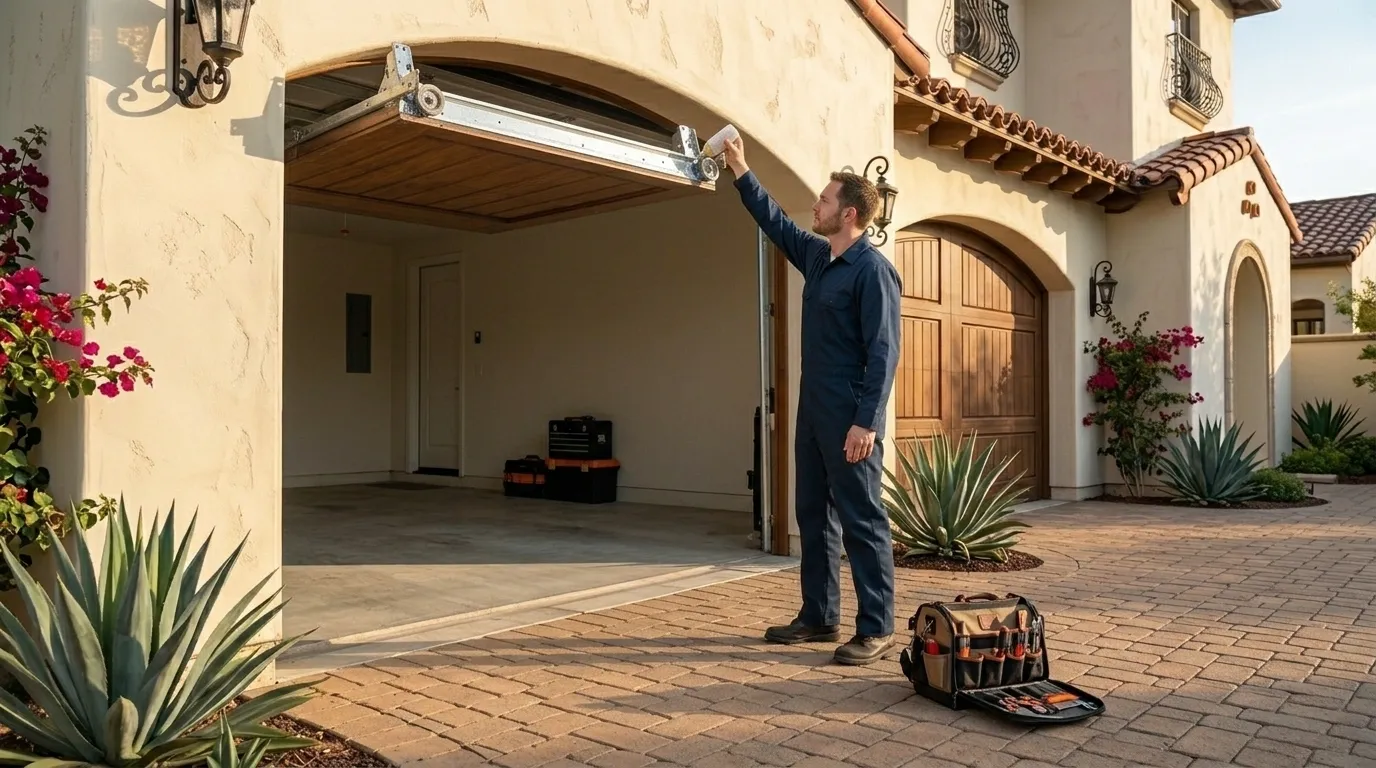
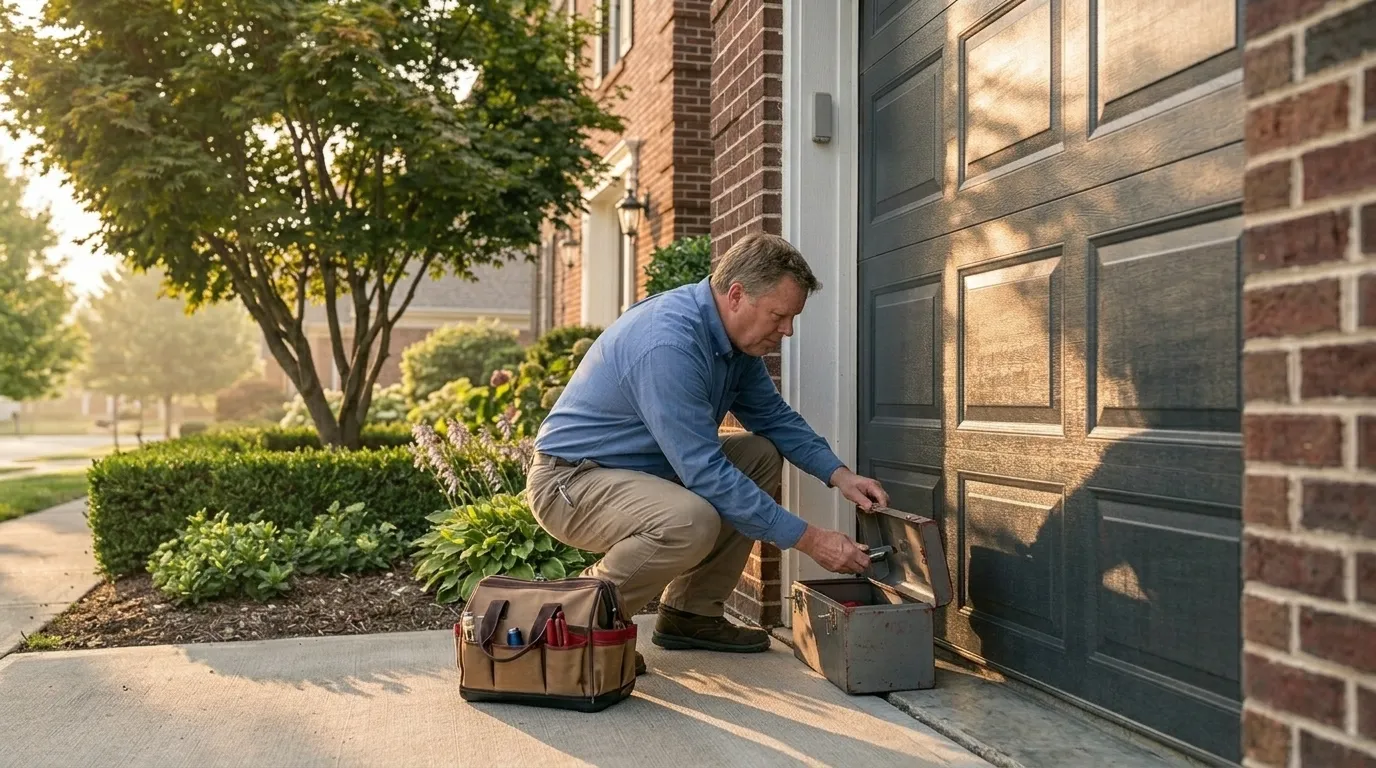
Recent work from this service line.
Why Liberty Calls Us
Frequently Asked Questions
How do I know if it's the rollers and not the springs?
Rollers usually show up as noise and a rough or jumpy ride at one specific point in the door's travel, with the door still opening under its own power. A spring problem feels different - the door is heavy, hard to lift by hand, or won't stay open on its own. If the opener is straining but the door still tracks smoothly, look at rollers first.
Can I just replace the rollers myself?
You can, but the top roller near the spring side and any roller near a frayed cable is where people get hurt - the door section can drop suddenly once a roller pin is out. If your rollers are steel and original to an older door, we'd rather look at the whole track and hardware before you're mid-job with a section off the track.
Why do my rollers get worse every winter?
Steel rollers lose their smooth turn in cold weather, and grease that's fine in warmer months thickens up and stops lubricating right when the metal is stiffest. In a cold, moderate climate like Liberty's, that's when a roller that's been merely noisy all year finally jumps the track.
Need Garage Door Roller Replacement, Liberty MO?
Call now for straight answers on cost and timing.