
Liberty Garage Door Guide
Why a Door Goes Off Track: Liberty, MO Edition
Liberty houses built between 1951 and 2002 carry track hardware that ages differently in cold-climate swings. Here's what actually knocks a door off its rails.
- Licensed & Insured
- Same-Area Service Calls
- Upfront Pricing
When It Stops Being a DIY Job
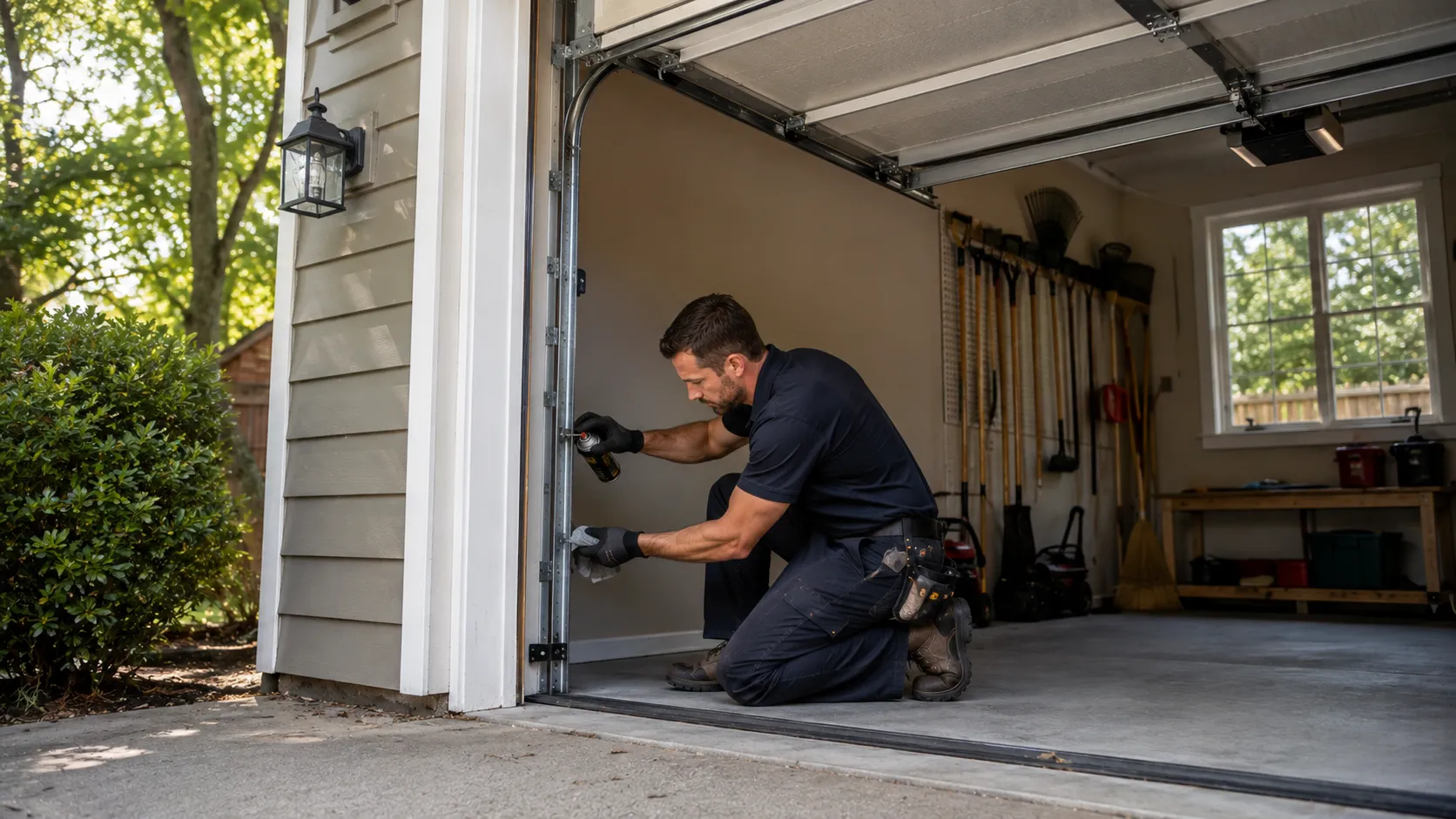
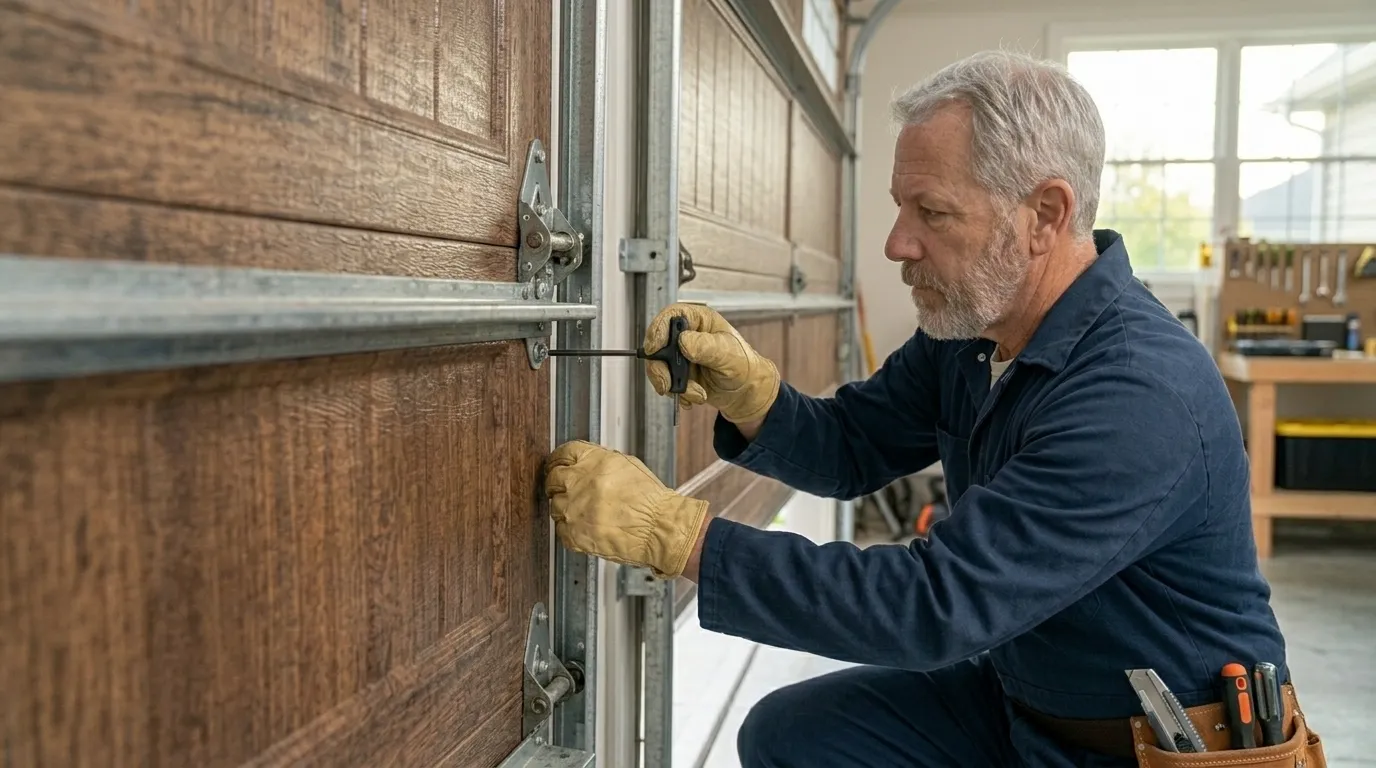
A door that's rattled loose from its track usually gives you a warning before it jumps off completely - a roller that squeals wide, a bottom panel that leans a quarter inch out of the frame, a door that binds halfway up. In a lot of Liberty's housing stock, built between 1951 and 2002 with the bulk going up through the 1960s and 70s, the track brackets are the original galvanized steel, lag-bolted into jamb studs that have shifted slightly over fifty-plus years of seasonal expansion. If the door is still moving and just tracking crooked, you can sometimes coax it back with a level and a wrench on the bracket bolts.
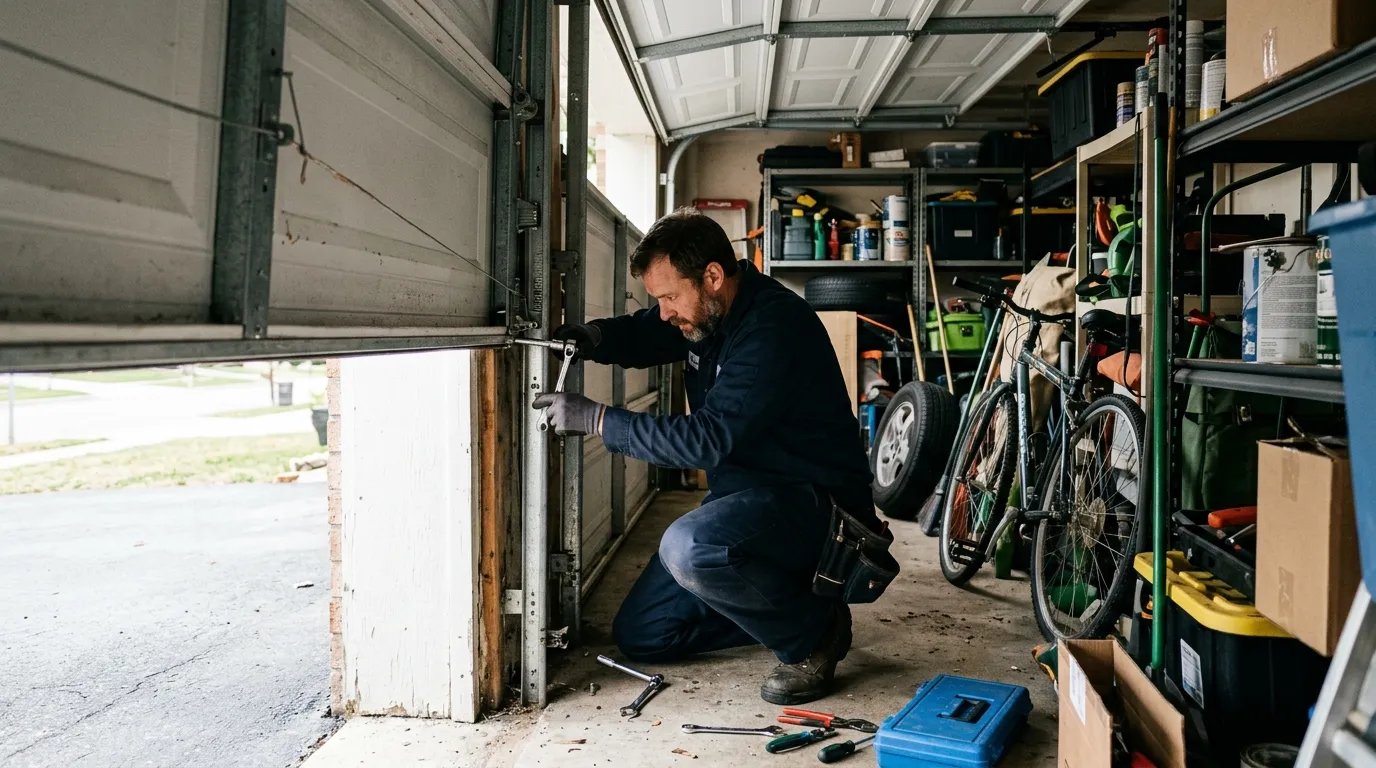
Once a roller has actually left the track, or the track itself is bent - which happens more on the bottom five feet where a car bumper or a warped panel puts sideways pressure on it - that's not a tighten-the-bolts fix anymore. Bent track has to come off and get replaced, and torsion springs on these older setups are still under load even with the door open, so pulling brackets without releasing tension first is how people get hurt. If the door came off track on one side only, or you hear a metallic pop before the jam, call before you touch the springs.
What Local Conditions Do
Liberty sits in a moderate cold climate band, and that matters more for track alignment than most homeowners expect. Steel track brackets and lag screws that anchor into wood jambs go through a real freeze-thaw cycle here every winter, and wood framing moves with it - shrinking slightly in dry cold, swelling back in spring. On houses from the 1960s and 70s, which make up most of the stock across the area's twenty-some neighborhoods, that decades-long flex works bolts loose a sixteenth of an inch at a time.
You don't notice it until the track is far enough off plumb that a roller starts riding the edge instead of the channel, and eventually skips out. Vertical track sections near the floor also take the brunt of any ice or slush that gets tracked in on tires, and rust at the base bracket is a slow, quiet cause of track separation that doesn't show up until the door already sags. None of this is unique to any one house - it's a function of age and climate acting on hardware that was never designed to be maintenance-free forever.
When Waiting Is Fine
Not every wobble means the door is about to leave the track. If the door is on original 1960s-70s hardware and you notice a little side-to-side play at the very top of travel but it still closes flush and locks square, that's often just an aging roller wearing slightly oval, not a structural problem. You can watch it for a season rather than treat it as urgent.
Same goes for a squeak that shows up only in the coldest weeks - moderate cold climates like this one stiffen up old lubricant, and a fresh coat of the right lubricant (not WD-40, which washes out grease) often quiets it down without any hardware work. Where I'd tell you to wait: cosmetic surface rust on the track that hasn't reached the bracket bolts, or a door that's slightly heavier to lift by hand in January than in July. That's normal seasonal stiffness on older springs, not failure.
Where I wouldn't wait: any grinding sound, a roller visibly outside the channel, or a door that's stopped closing level with the floor on one side.
The Situation
Most of the track failures I see in this area trace back to the same root cause: original hardware from houses built in the 50s through the 90s, still doing its job decades past when anyone expected to think about it, now flexing against framing that's moved with fifty winters of cold-climate cycling. It's not damage in the dramatic sense - nobody backed into it, nothing failed catastrophically overnight. It just wore loose the way anything mechanical does when nobody's tightened a bolt since Nixon was in office.
The honest limitation here: if your track brackets are rusted through at the base, or the jamb wood behind them has softened, a new track section won't hold any better than the old one did. That's a repair that turns into a bigger conversation about the frame itself, and I'll tell you that on-site rather than sell you a track you'll be replacing again in two years.
How We Can Help
Garage Door Maintenance
Garage Door Maintenance handled by trained, insured local technicians with upfront pricing.
Learn more →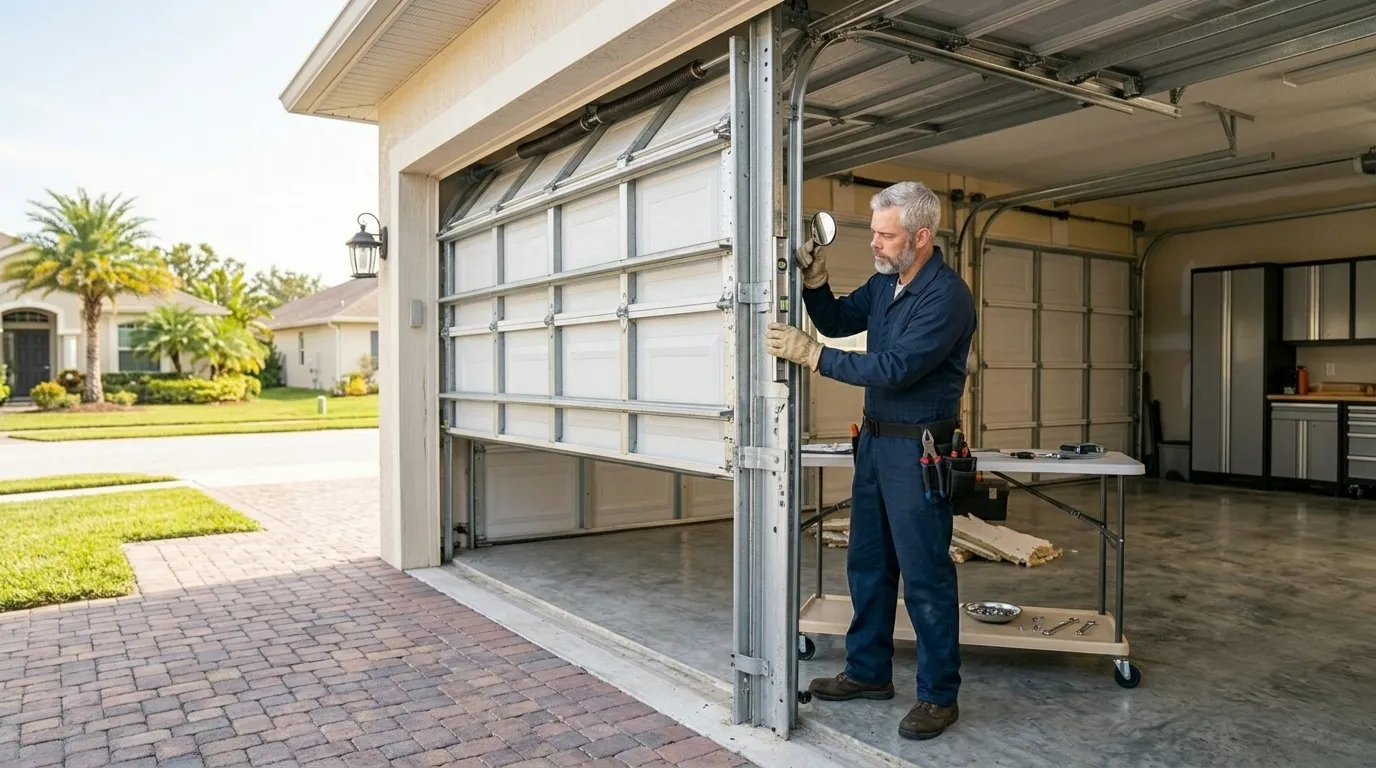
Garage Door Service
Tune-ups, lubrication, and safety checks that catch a small problem before it becomes a service call.
Learn more →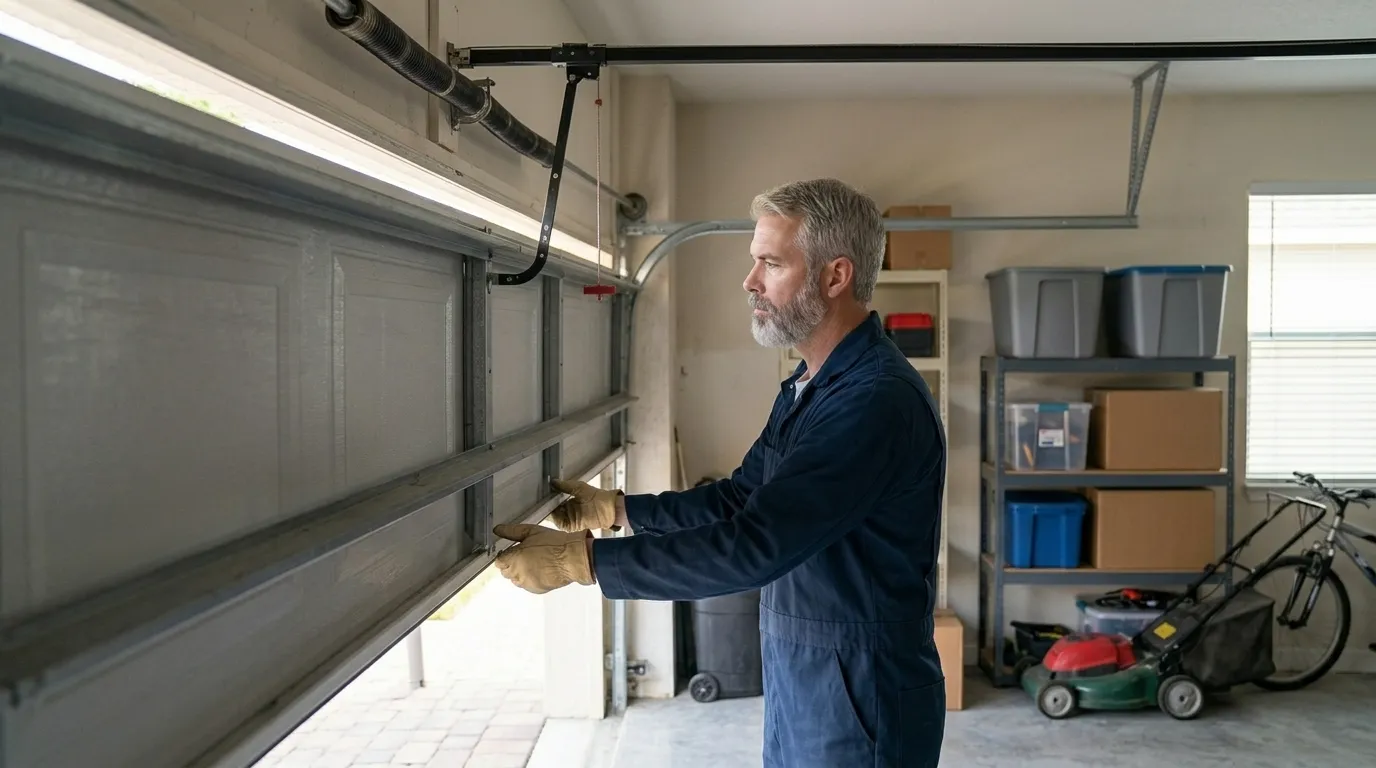
Garage Door Roller Replacement
Worn, noisy rollers swapped for smooth nylon ones so the door runs quiet.
Learn more →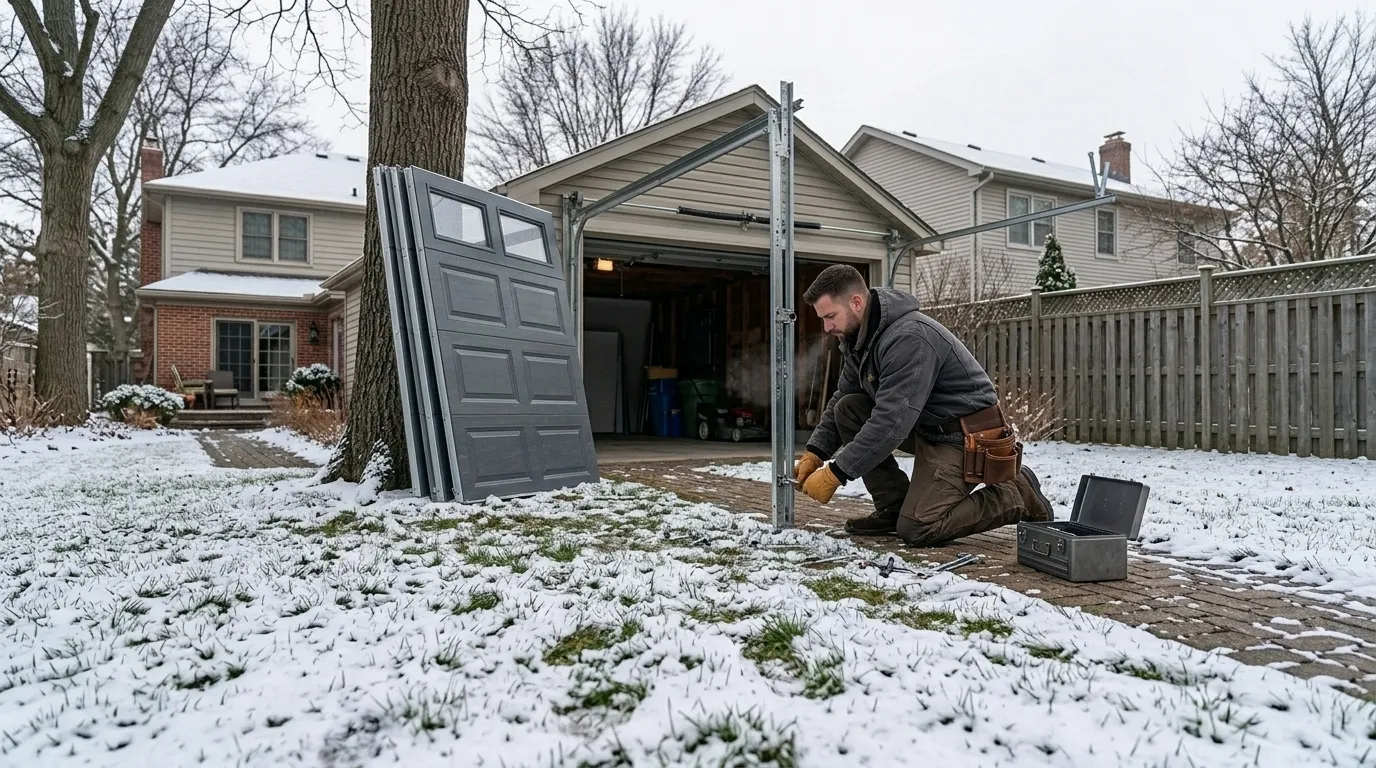
Garage Door Spring Repair
Broken torsion and extension springs replaced and the door rebalanced in the same visit.
Learn more →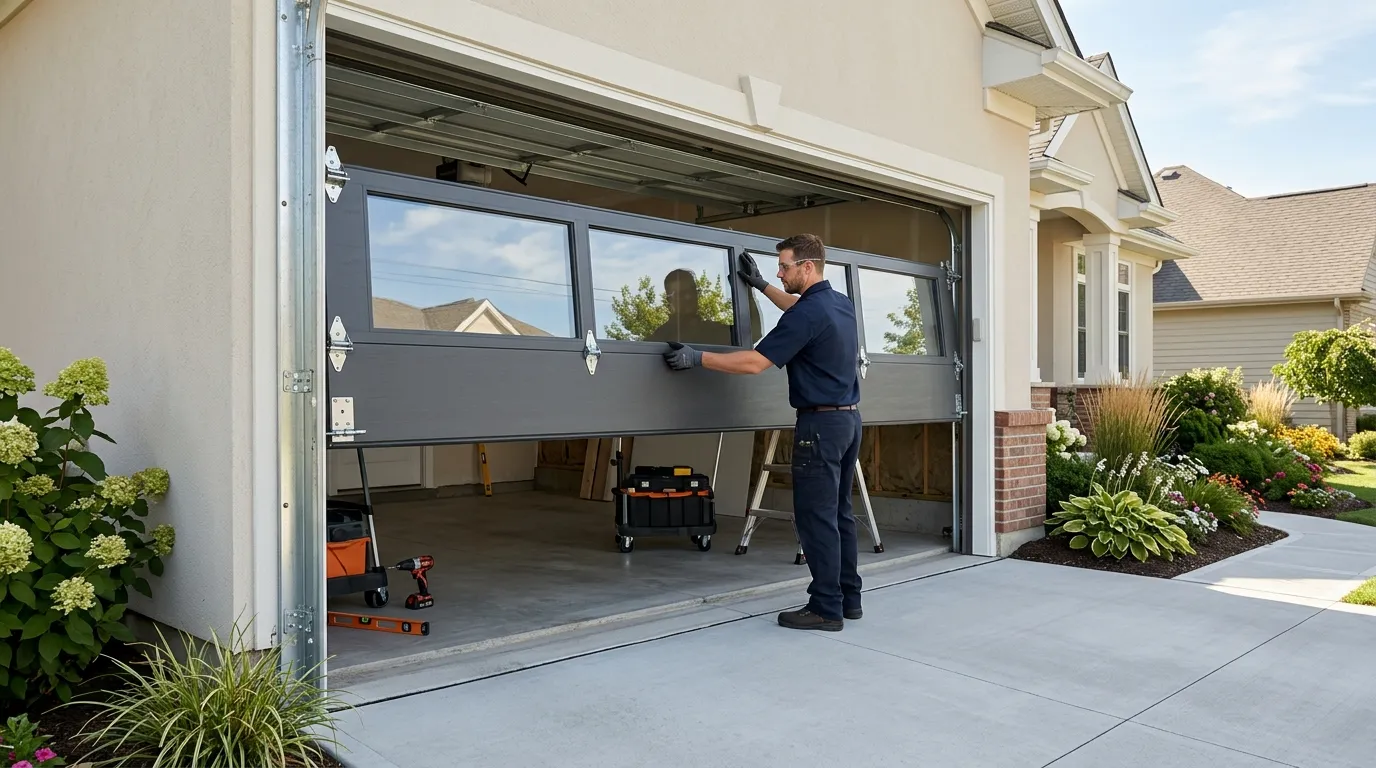
Garage Door Installation
New sectional doors sized and installed for the housing stock actually built in this area.
Learn more →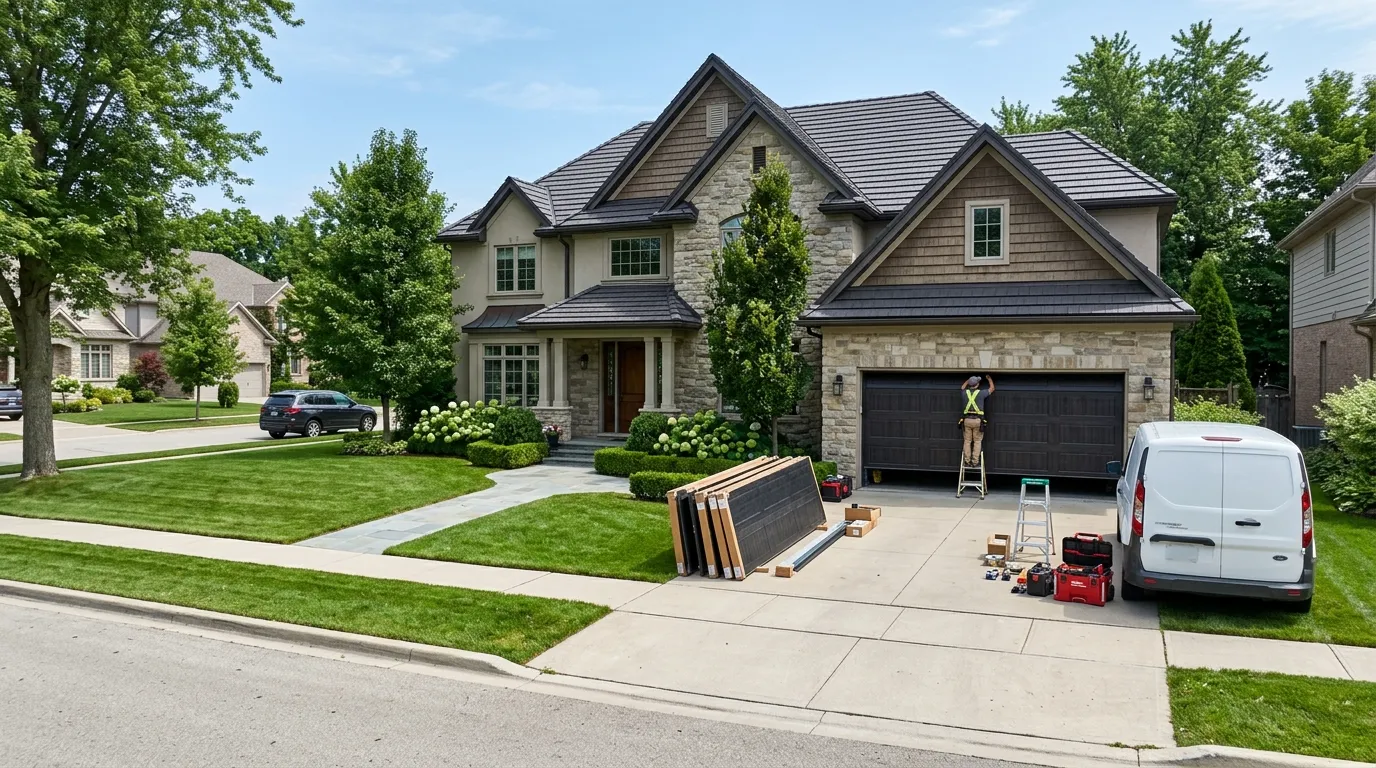
Garage Door Off Track
Doors that jumped the track reset safely, with rollers and alignment checked so it holds.
Learn more →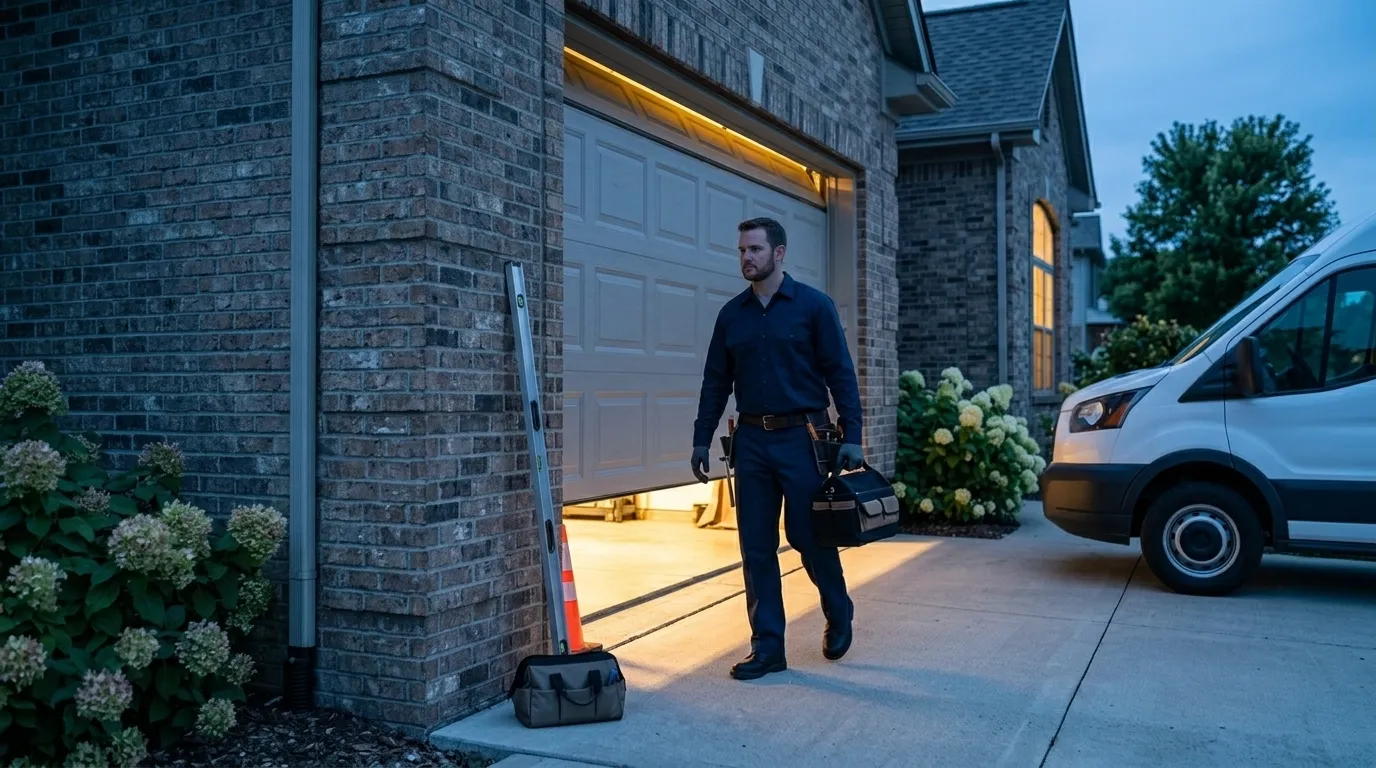
Garage Door Repair
Springs, cables, tracks, rollers, and openers fixed by a tech who explains the problem before touching anything.
Learn more →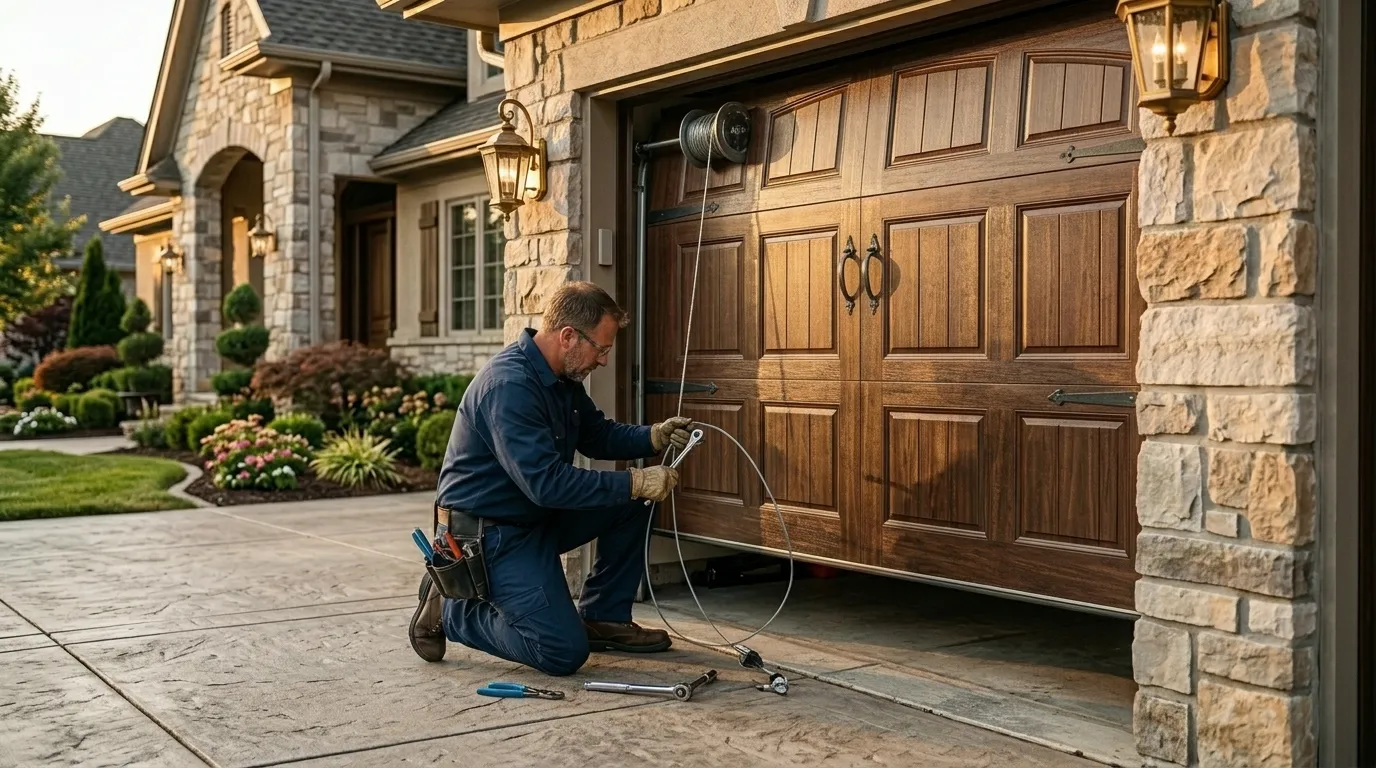
Garage Door Opener Repair
Openers that hum, stall, or reverse - diagnosed and fixed, from worn gears to logic boards.
Learn more →Frequently Asked Questions
My garage door came off the track on one side - is that an emergency?
If it's still holding up and hasn't fallen, it's urgent but not usually a same-hour emergency - don't force it open or closed. Torsion springs on Liberty's older 1960s-70s setups stay loaded even with the door stuck, so leave the bracket bolts alone and call to get it looked at before anyone tries to move the door by hand.
Why does my door only go off track in winter?
Cold-climate freeze-thaw cycling shrinks and swells the wood jamb your track brackets are bolted into. On houses from the 1950s through the 90s, decades of that movement work the lag screws loose a little more each winter, until a roller finally rides off the edge of the channel instead of staying in it.
Can I just bend the track back myself?
You can sometimes true up a slightly bowed track with a rubber mallet if the door is still on its rollers and nothing's under tension. Once a section is visibly kinked or the roller's out of the channel, bending it back usually just moves the problem instead of fixing it - it needs a new section.
Have a Door That Needs a Second Opinion?
Call and describe what it is doing - we will tell you what it likely is.