
Liberty Garage Door Guide
When a Liberty Garage Door Needs More Than a Squirt of Oil
Liberty homes built 1951-2002 face cold-climate wear on aging springs and openers. Here's when garage door repair is a DIY fix, and when it isn't.
- Licensed & Insured
- Same-Area Service Calls
- Upfront Pricing
When It Stops Being a DIY Job
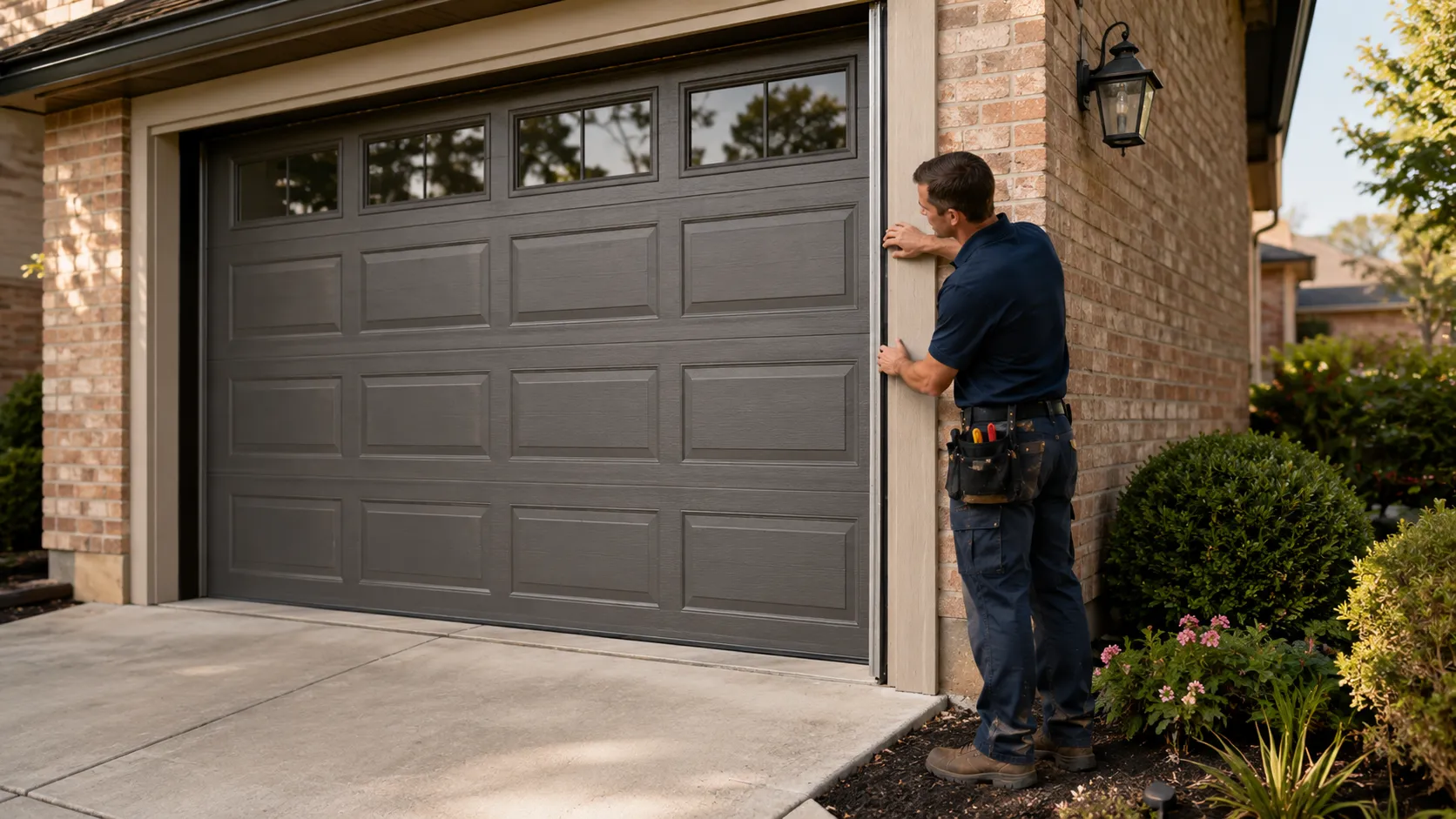
Most of the doors we get called out on in Liberty sit on houses built somewhere between 1951 and 2002, with the median falling around 1974 and the bulk of the stock dating to the 1960s and 70s across the city's twenty named areas. That matters more than people think. A door from that era usually runs on a torsion spring sized for the hardware of its decade, not for a retrofit steel section someone bolted on later.
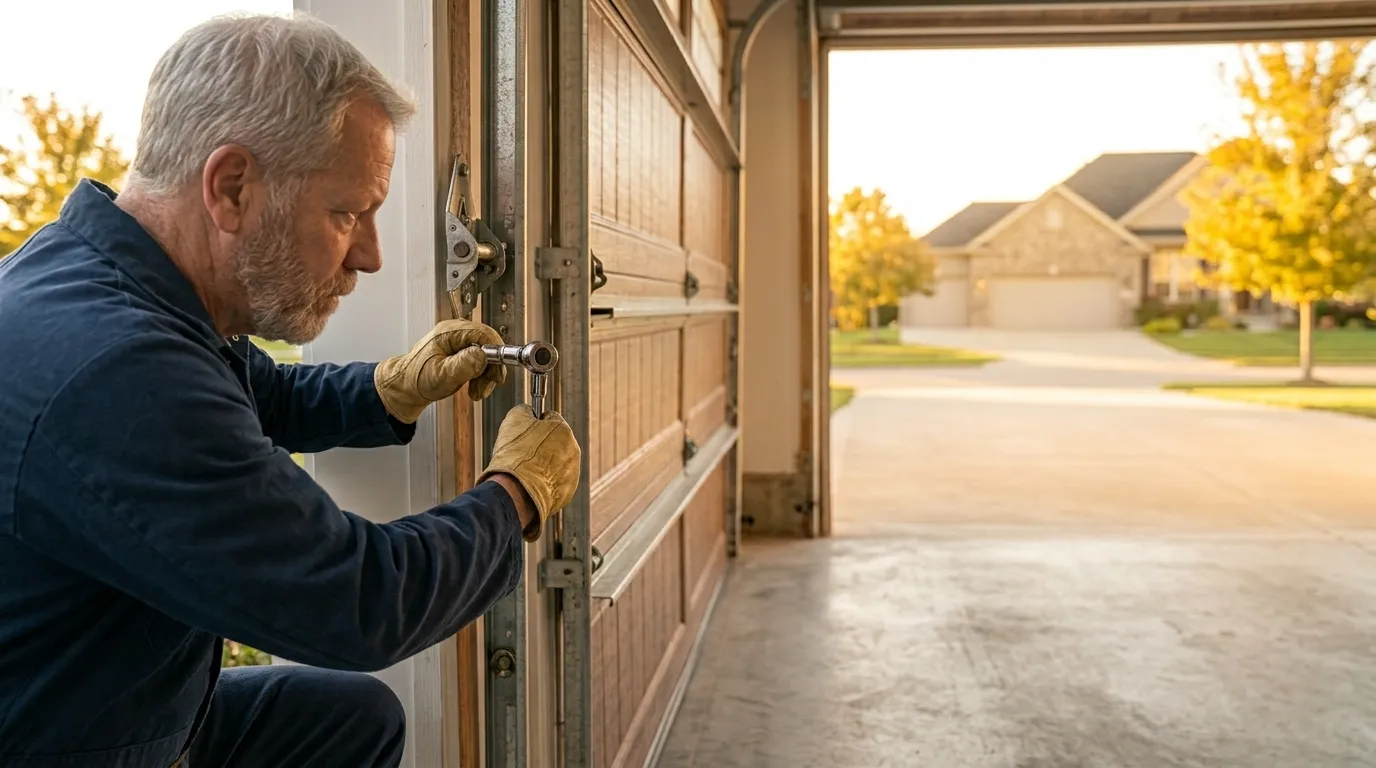
If a spring snaps on one of those older setups, or a cable frays where it wraps the drum, that's not a job to open up with a stepladder and a socket set. The spring is under enough tension to break a wrist or worse, and on original 1970s track the mounting bolts are often rusted into the jamb. Same goes for an opener that grinds instead of pulling - if it's original to the house, parts for it likely aren't stocked anymore, and forcing it through another cycle just strips the gear.
Anything involving springs, cables, or a bent track on a door this age is a call, not a weekend project. Panel dents and squeaky rollers are a different story, and we get to that below.
What Local Conditions Do
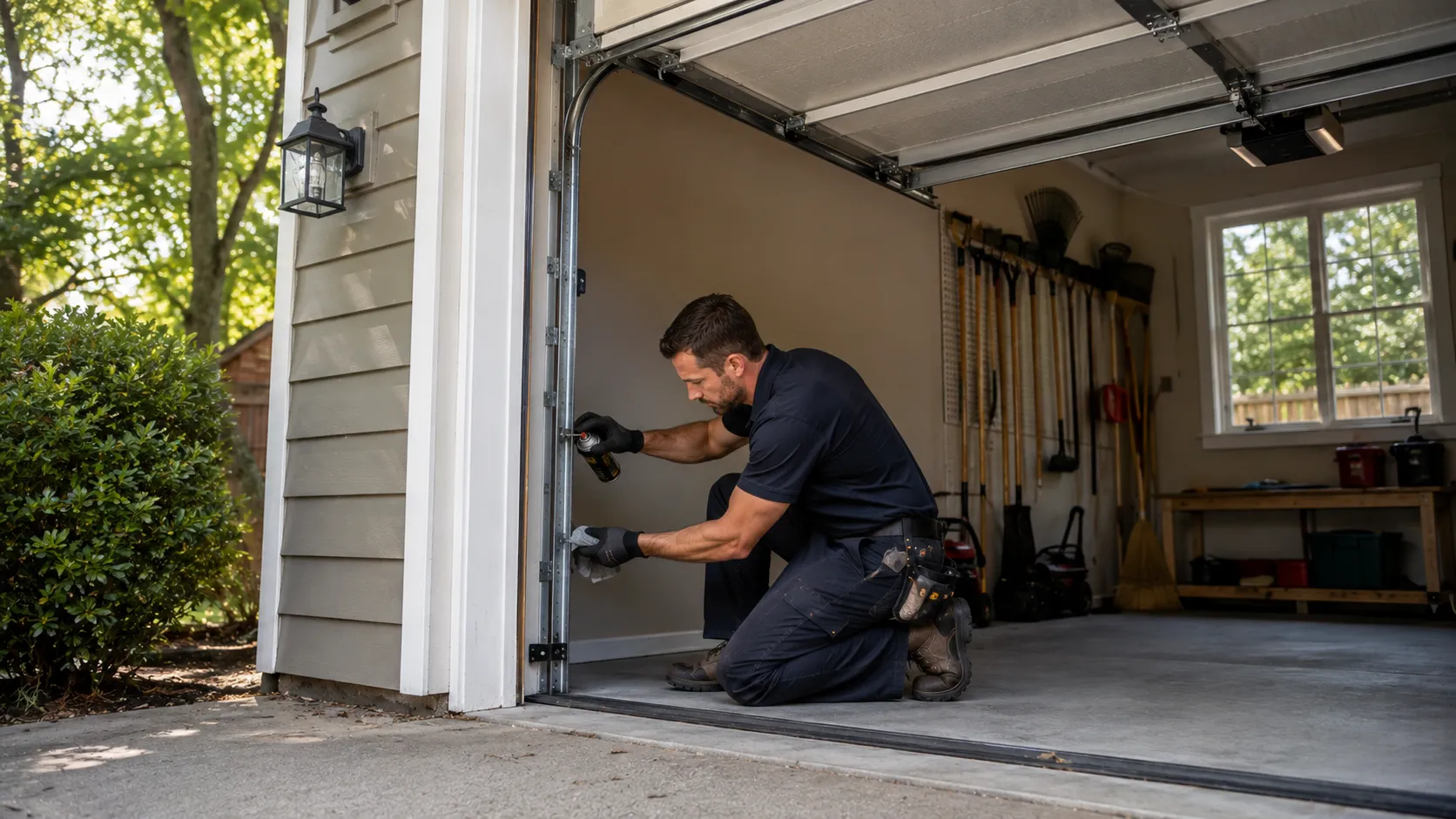
Liberty sits in a cold-moderate climate band, and that band is doing quiet damage to doors that were installed with a milder swing in mind. Steel expands and contracts with the temperature, and on a door original to a 1960s or 70s build, the weatherstripping and seals were never engineered for the freeze-thaw cycling we actually get here. Cold makes torsion springs stiffer, which is why a marginal spring that limps along in October will finally let go on a hard January morning - the metal has less give left in it right when it's under the most load.
Openers feel it too: a chain drive that's been fine for years can start binding once the grease in the gearbox thickens up in the cold, and that shows up as a door that hesitates or reverses halfway. None of this is a design flaw in any one door. It's just what forty-plus years of cold-band cycling does to hardware that was never meant to run this long.
If your door struggles more in winter than summer, that's the climate talking, not a coincidence.
When Waiting Is Fine
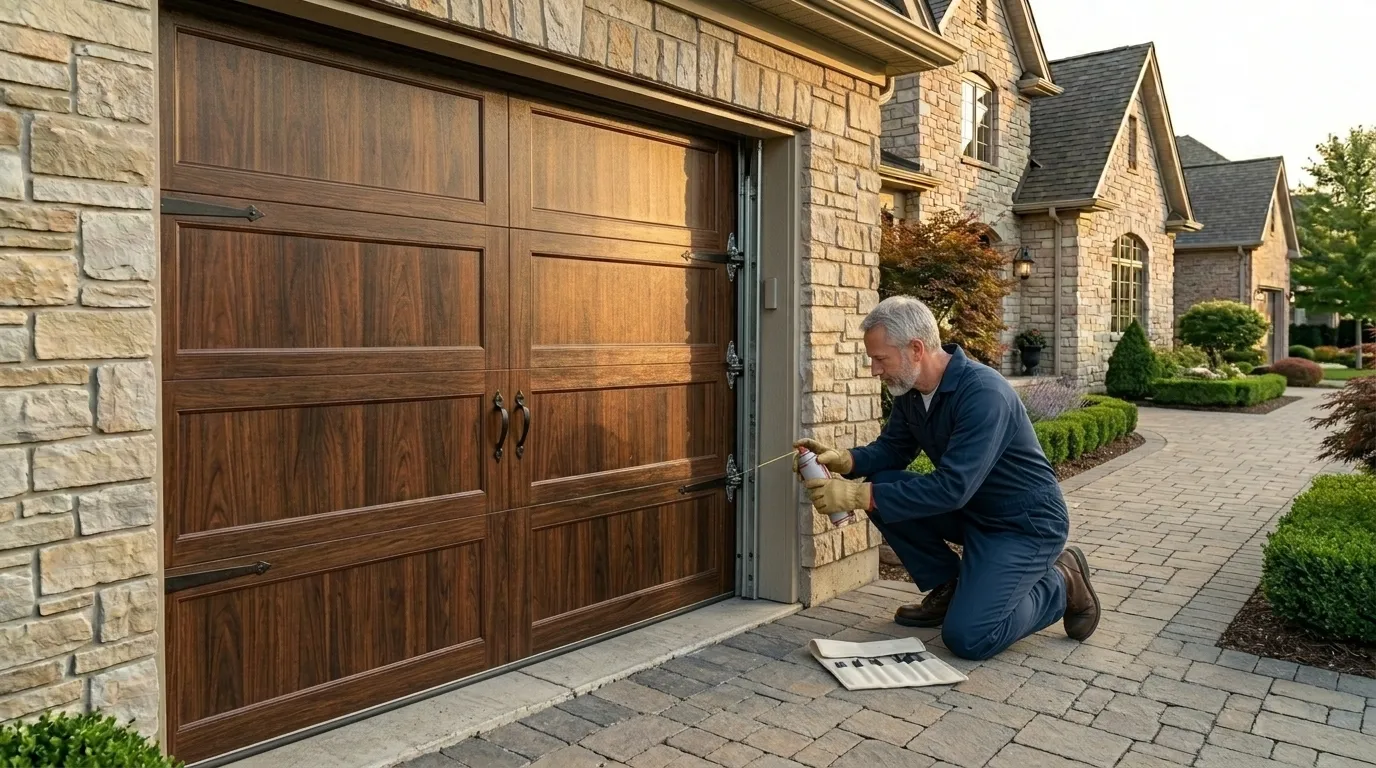
Not everything needs a truck. A door that's a little noisy but still opens and closes on schedule is usually a lubrication problem, not a structural one - a dry roller or a dry hinge pin will squeal for months before it actually fails, and that's something you can handle yourself with the right grease and ten minutes. A cosmetic dent in a lower panel that doesn't affect the seal or the track alignment can sit for a season if the budget's tight.
Same with a keypad that's gotten slow to respond; that's often a battery, not a board. Where we'd tell you to wait is anywhere the door still tracks straight, still reverses on contact, and still seals against the weather - if those three things are true, a rattle or a squeak is a maintenance item, not an emergency. Where we wouldn't tell you to wait: any gap in the cable, any spring that's visibly stretched or separated at a coil, or a door that's started dropping unevenly on one side.
That's tension failing, and tension failing doesn't wait for a convenient weekend.
The Situation
The area we work runs about 45,207 households, with roughly 22,929 of those owning the house the door is attached to rather than renting it - which is relevant because an owner is the one deciding whether to repair or replace, and a landlord usually isn't. Median household income across the area sits at $71,275, which tends to mean most homeowners here are making one door decision every fifteen or twenty years, not treating it as a recurring expense.
Claycomo sits about four miles off, Missouri City six, Sugar Creek seven, and Gladstone and Kearney both around eight - all inside the same building-stock era and the same cold-moderate weather Liberty gets, so what's true about a 1970s door here is generally true a few miles out too. Further edges of the service area - Smithville, Platte City, Grain Valley - stretch toward twenty miles, which is close enough to serve but far enough that a same-day call on the far edge isn't guaranteed the way it is close in.
How We Can Help
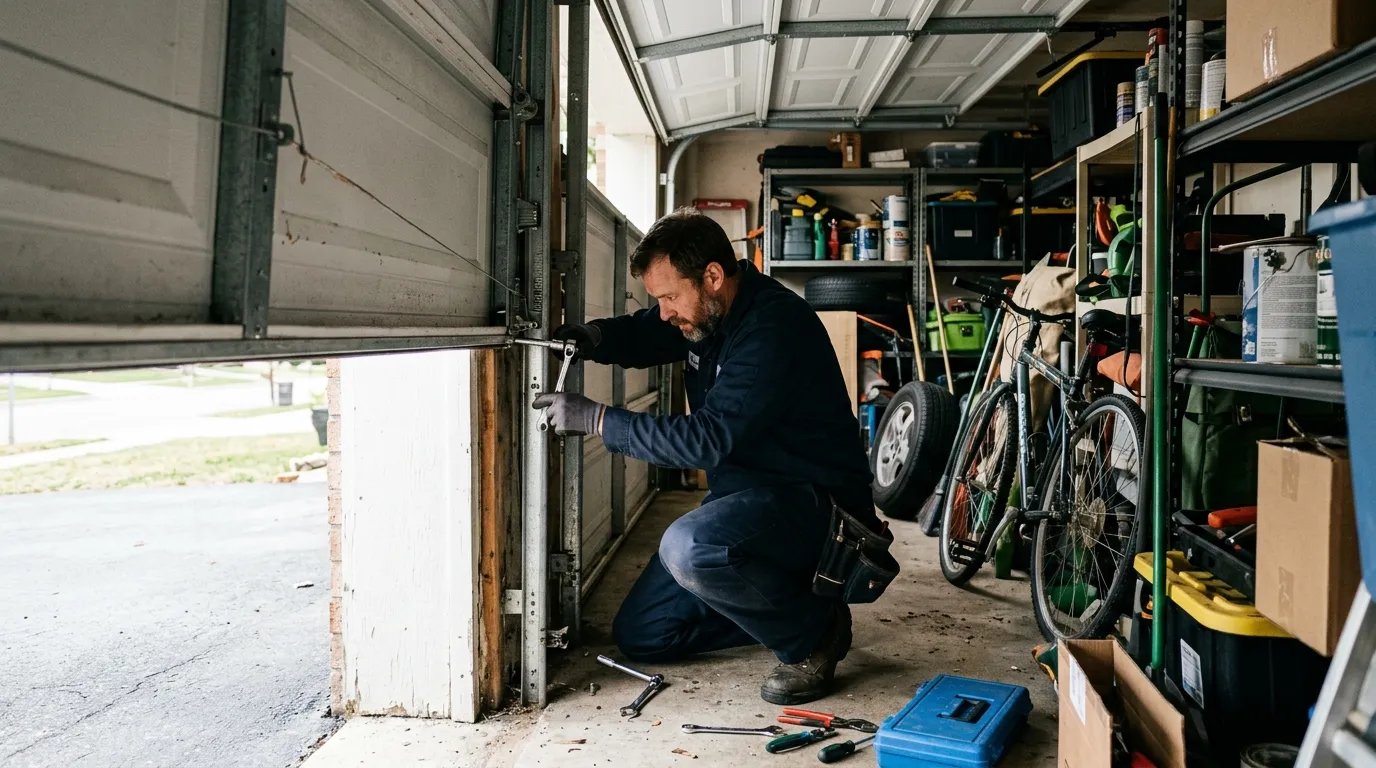
Garage Door Maintenance
Garage Door Maintenance handled by trained, insured local technicians with upfront pricing.
Learn more →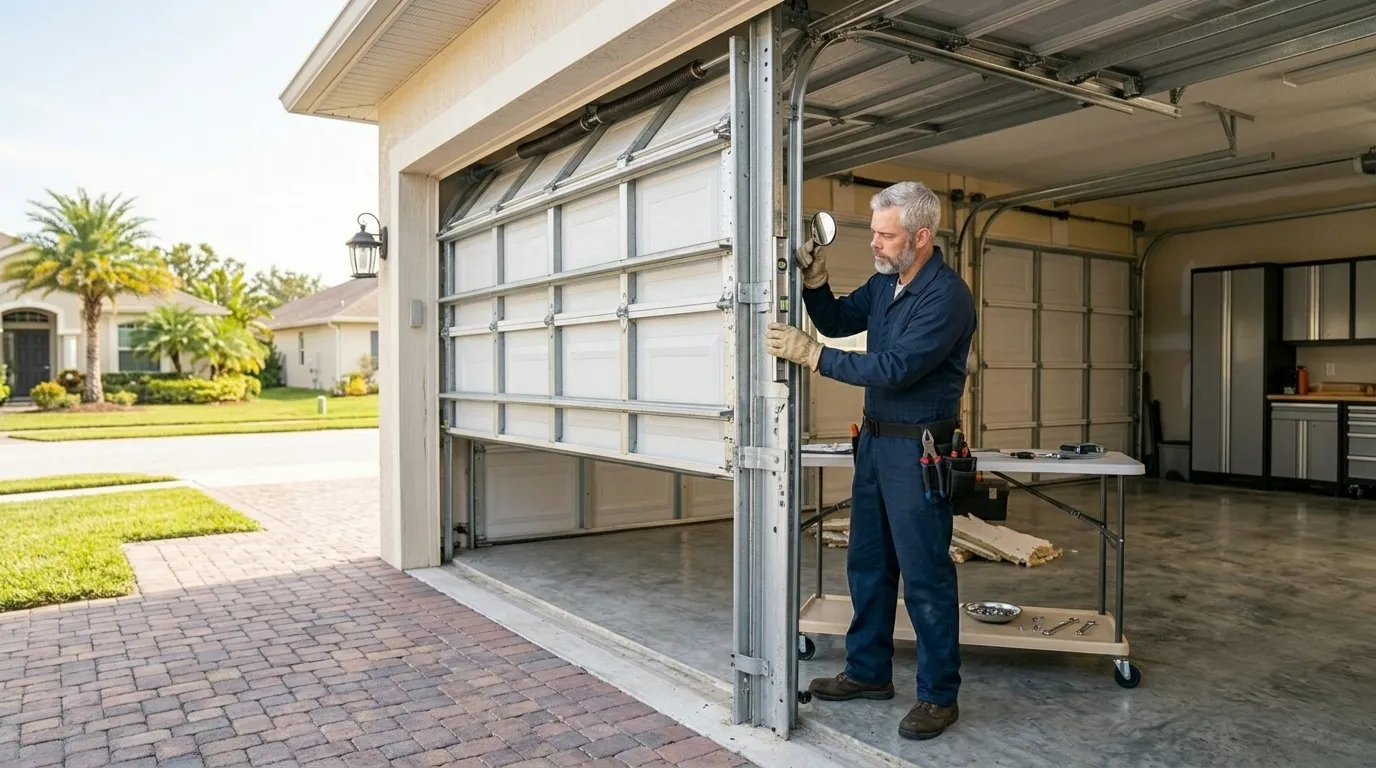
Garage Door Service
Tune-ups, lubrication, and safety checks that catch a small problem before it becomes a service call.
Learn more →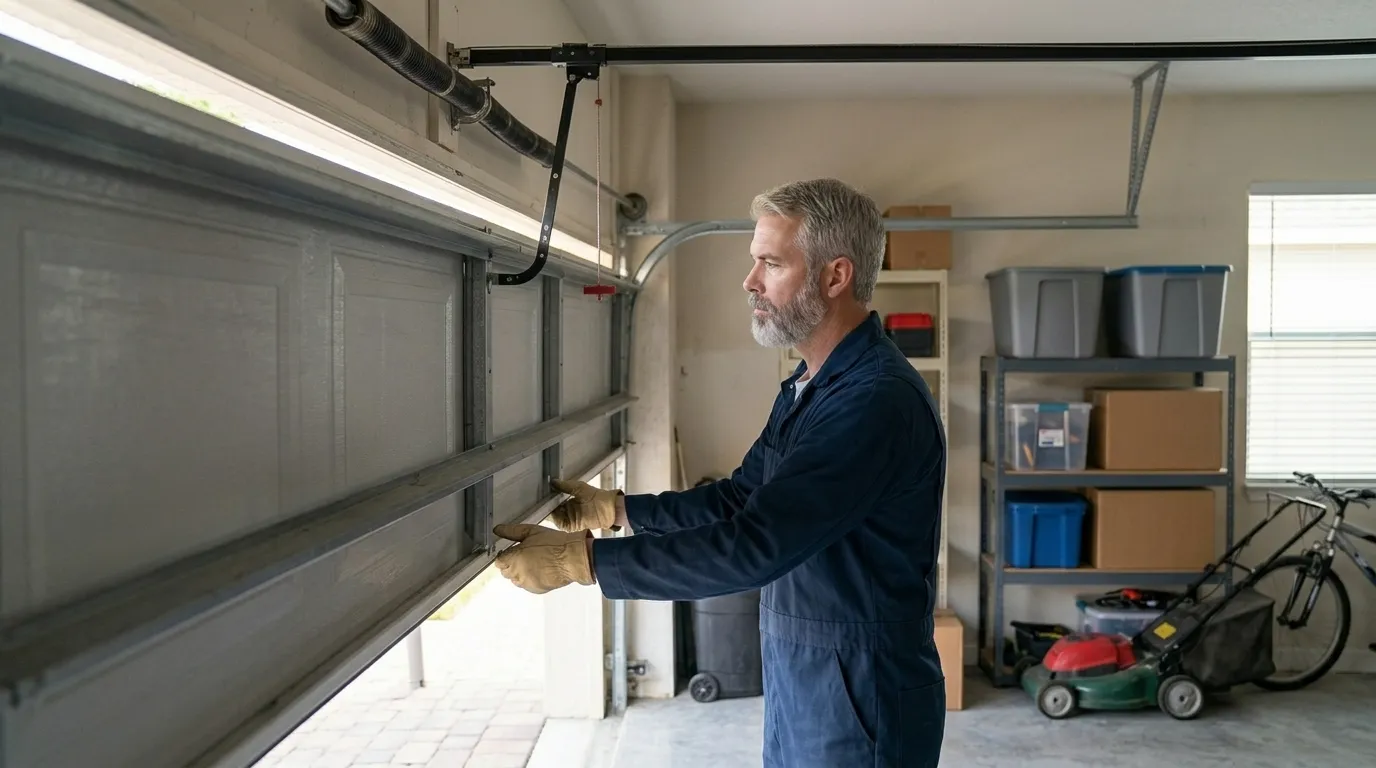
Garage Door Roller Replacement
Worn, noisy rollers swapped for smooth nylon ones so the door runs quiet.
Learn more →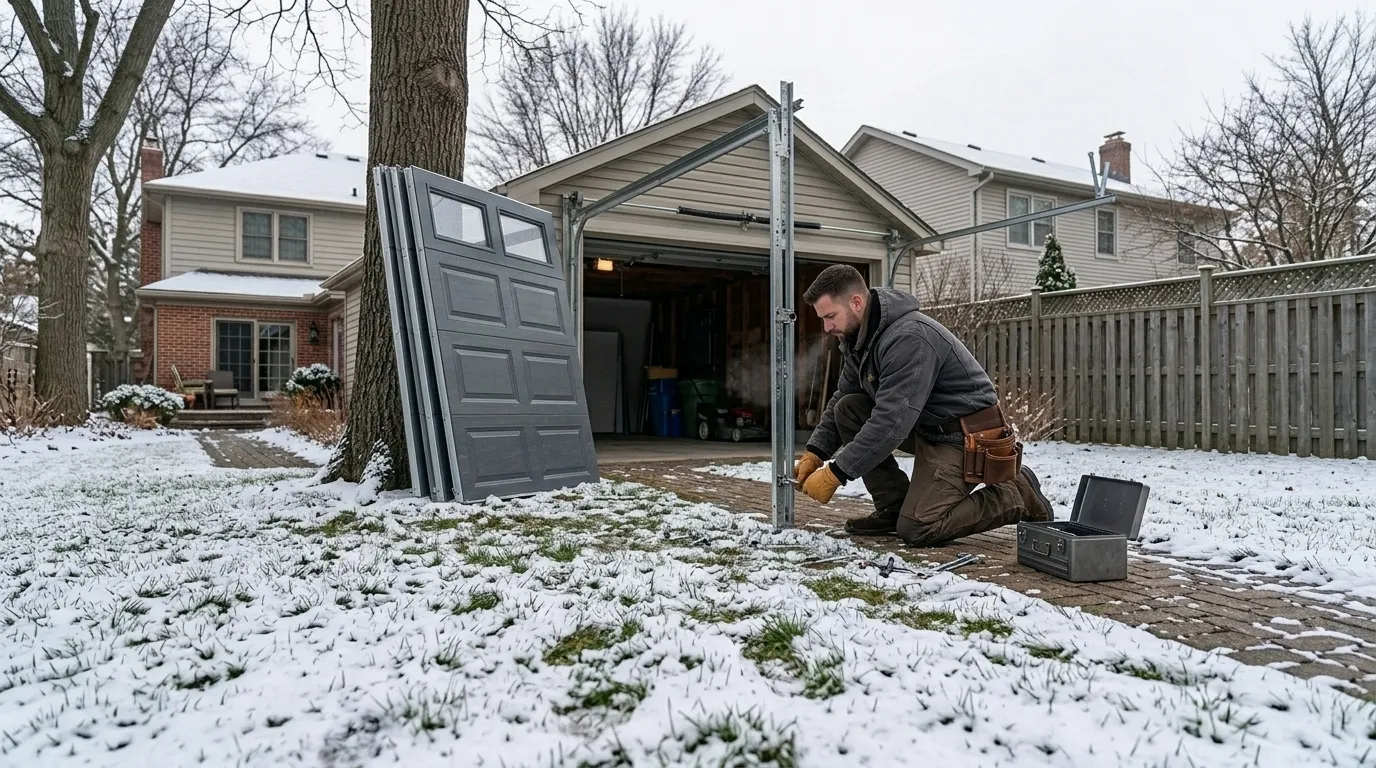
Garage Door Spring Repair
Broken torsion and extension springs replaced and the door rebalanced in the same visit.
Learn more →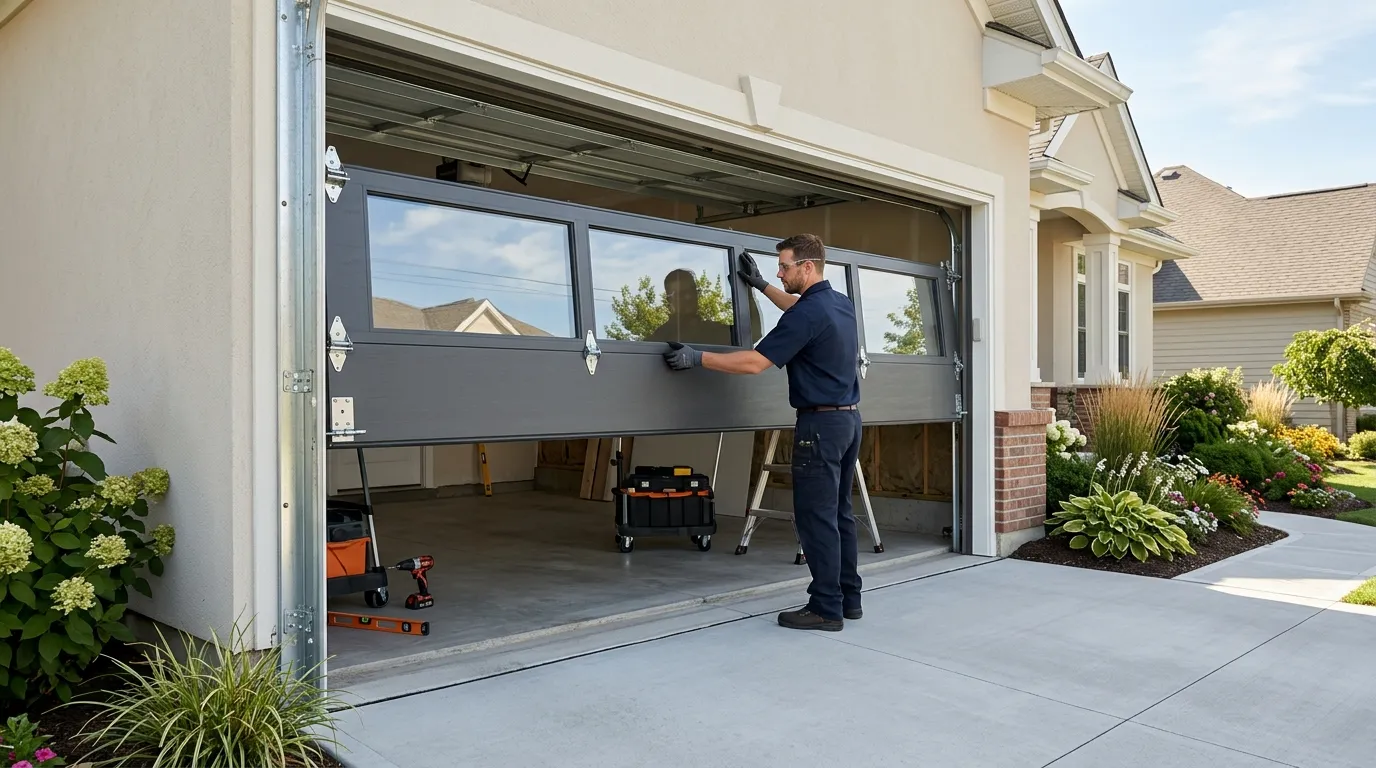
Garage Door Installation
New sectional doors sized and installed for the housing stock actually built in this area.
Learn more →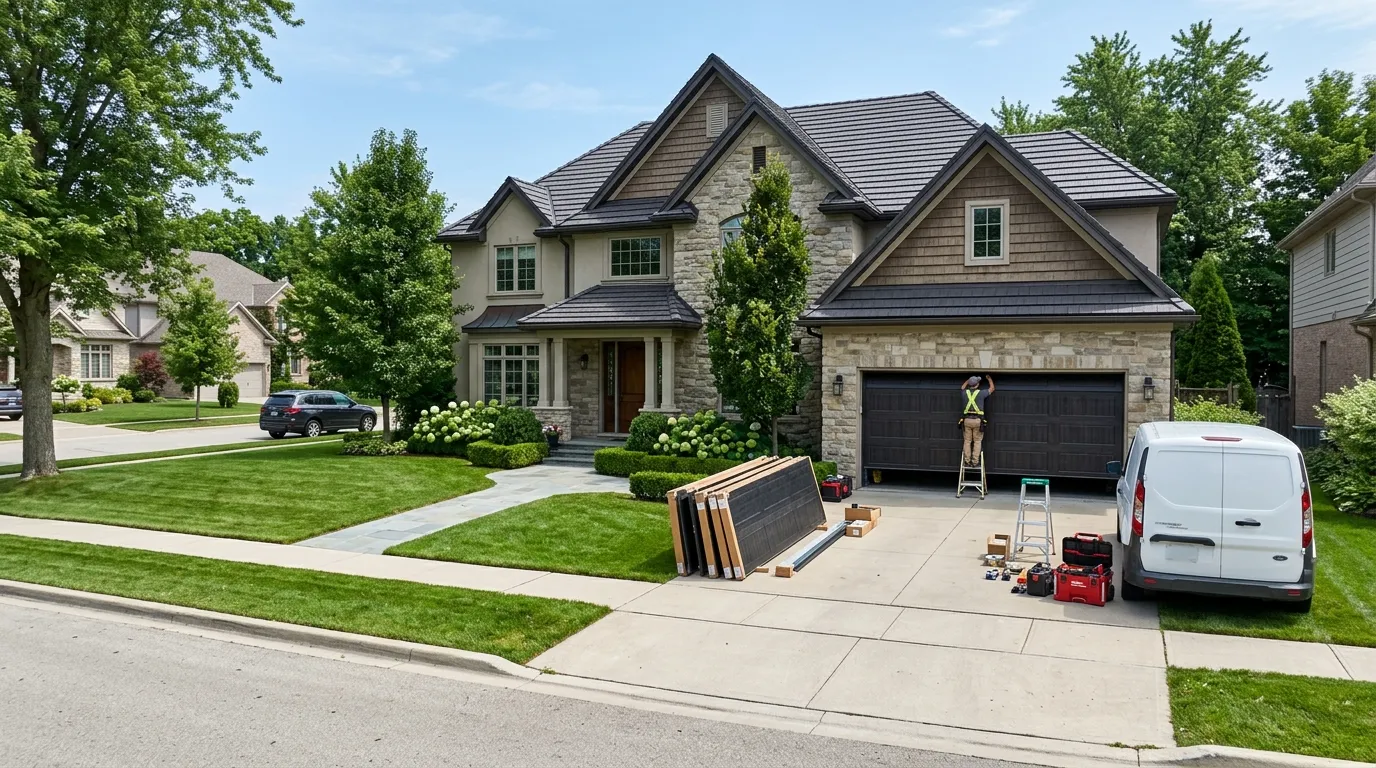
Garage Door Off Track
Doors that jumped the track reset safely, with rollers and alignment checked so it holds.
Learn more →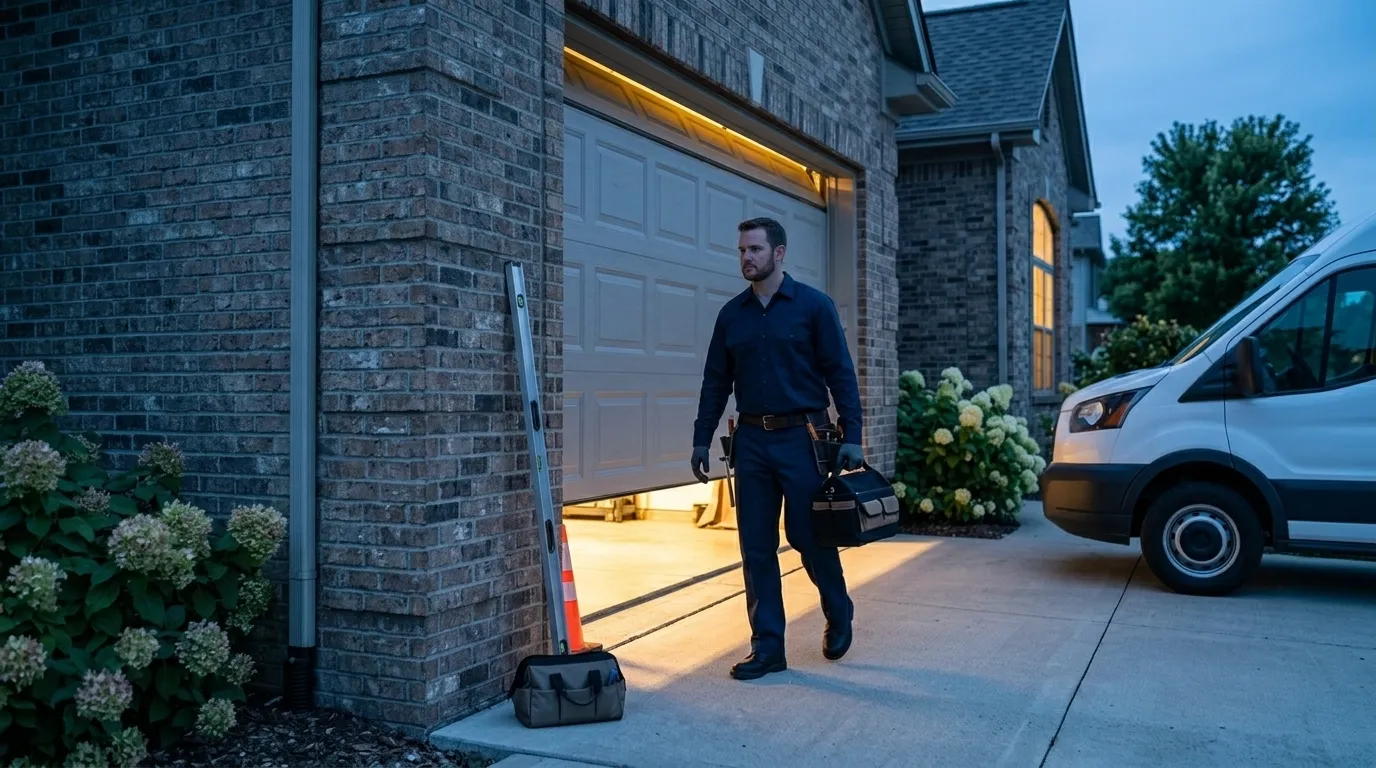
Garage Door Repair
Springs, cables, tracks, rollers, and openers fixed by a tech who explains the problem before touching anything.
Learn more →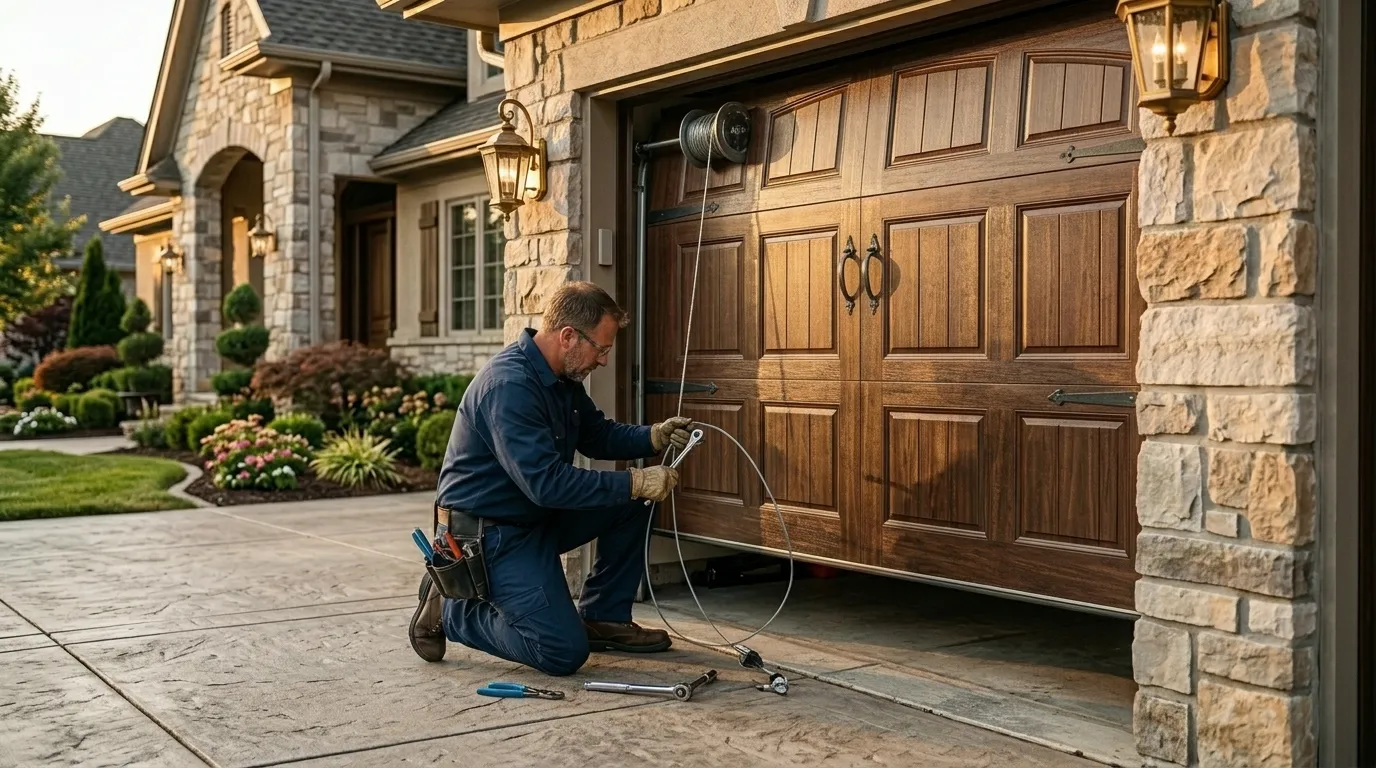
Garage Door Opener Repair
Openers that hum, stall, or reverse - diagnosed and fixed, from worn gears to logic boards.
Learn more →Frequently Asked Questions
My garage door spring snapped - is that something I can fix myself?
No. A torsion spring on a residential door is wound under enough tension to cause serious injury if it releases wrong, and on houses built in the 1960s-70s range common around Liberty, the mounting hardware is often rusted enough to make removal unpredictable. This is a call-a-pro job, not a DIY one.
Why does my opener struggle more in winter?
Liberty sits in a cold-moderate climate band, and cold thickens gearbox grease and stiffens spring steel. An opener or spring that's been marginal all year tends to finally fail on a hard cold morning because the metal and the mechanism both have less give left in freezing temperatures.
Is a squeaky roller an emergency?
Usually not. If the door still tracks straight, seals properly, and reverses on contact, a squeak is almost always a dry roller or hinge pin - a lubrication fix, not a structural one. Save the service call for cable gaps, uneven drops, or visibly stretched spring coils.
How old is a typical garage door in this area?
Housing across the service area was built mostly between 1951 and 2002, with the median around 1974 and the heaviest concentration in the 1960s and 70s across the twenty named areas here. A lot of original hardware from that window is still in service today.
Have a Door That Needs a Second Opinion?
Call and describe what it is doing - we will tell you what it likely is.