
Liberty Garage Door Guide
What Those Sounds From Your Garage Door Are Telling You
Liberty homes built mostly in the 1960s and 70s carry original torsion hardware. Here's how to tell a normal squeak from a spring about to let go.
- Licensed & Insured
- Same-Area Service Calls
- Upfront Pricing
When It Stops Being a DIY Job
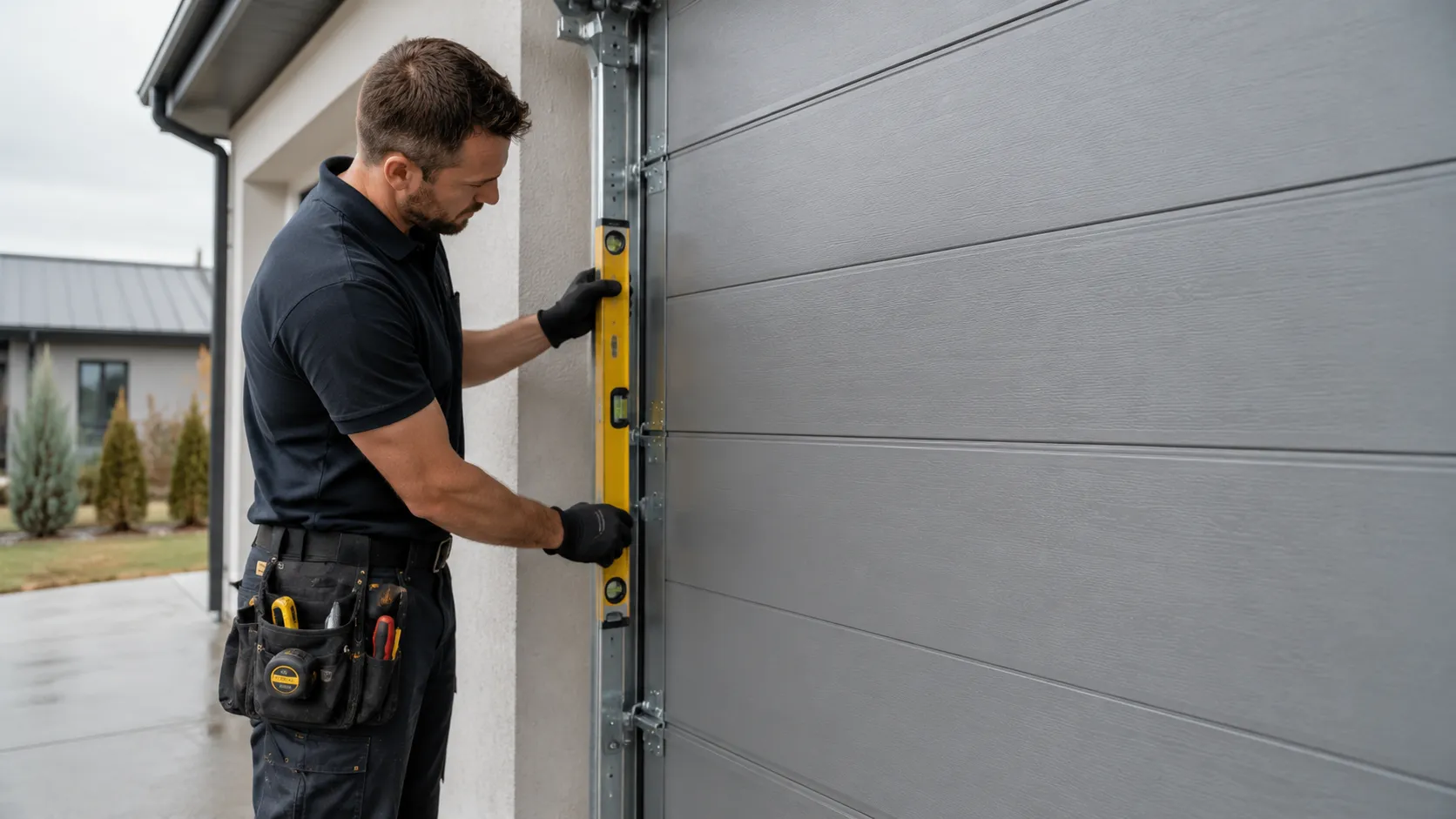
Most houses in Liberty went up between 1951 and 2002, with the bulk clustered in the 1960s and 70s across the city's twenty-some named areas. That matters because a torsion spring is rated for a set number of open-close cycles, and a door installed when the house was built is now decades past that number no matter how quiet it sounds. A grinding noise on the way up usually means a roller riding a track that's worn oval instead of round - common on hardware this old.
A loud bang followed by the door refusing to move is almost always a broken spring, and that's not a tightening job, it's a full spring swap with the door secured first. If you hear metal-on-metal scraping at the top of the track, or the door drops the last six inches on its own, stop opening it by remote. Those are the two sounds that mean the next pull could put a cable or spring under a load it isn't built to hold.
Everything short of that - a dry squeak, a rattle in the panel seams - is worth a look but not an emergency.
What Local Conditions Do
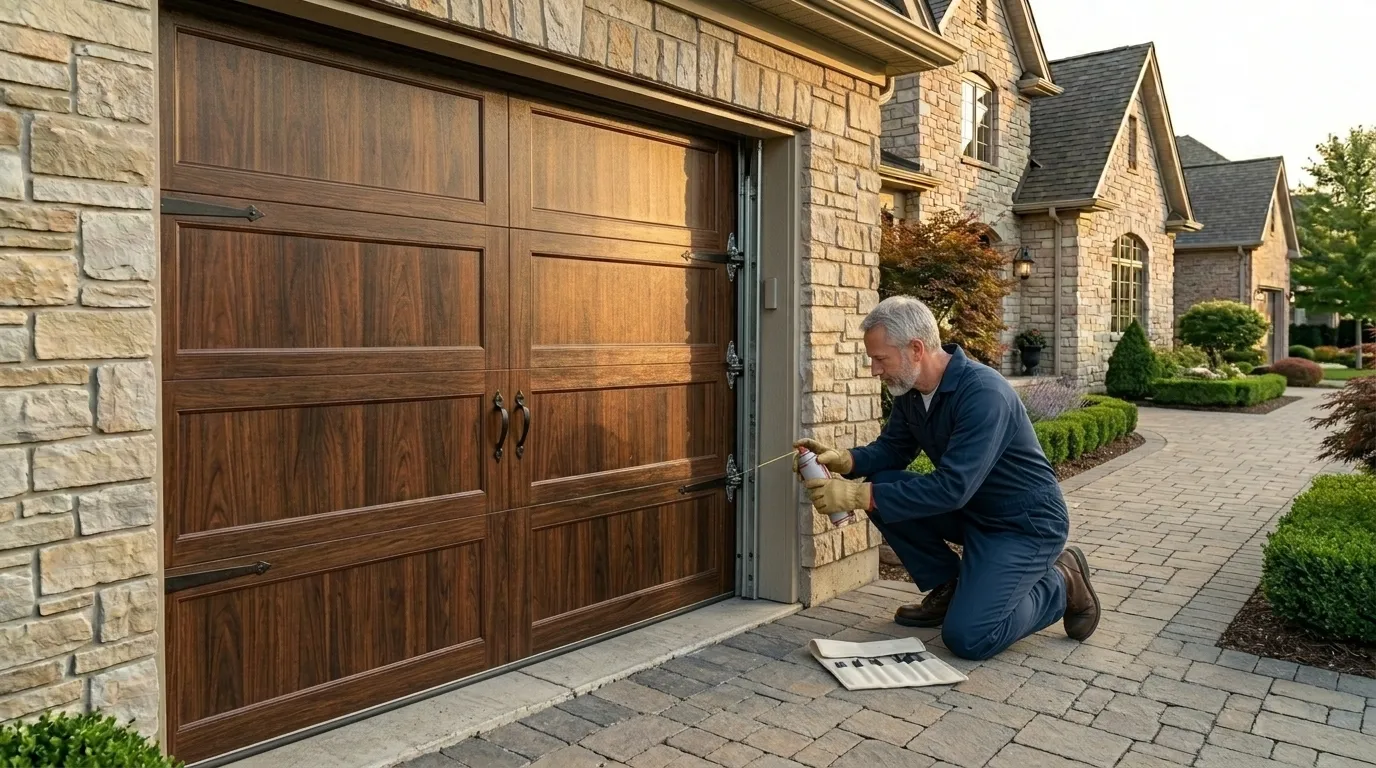
Liberty sits in a cold-moderate climate band, so a torsion spring that's fine in October can bind solid by January. Steel contracts in the cold, and grease that was fine in summer thickens up and stops doing its job right when the spring is under the most load - during the first lift of a cold morning. That's when you hear a groan instead of a smooth roll, or the opener strains and the door hesitates a few inches off the floor.
Condensation is the other one nobody thinks about: a garage that swings from near-freezing overnight to warm midday gets moisture on the tracks and hardware, and that's what turns a quiet roller into a squeaking one over a season. None of this is unique to any one house - it's what a cold-moderate climate does to steel and grease across the board. The fix is usually simple, a cold-rated lubricant and a track check before the first hard freeze, not a full teardown.
But if the spring is already original to a house from this era's stock, cold weather is often what finally finishes it off rather than what breaks it.
When Waiting Is Fine
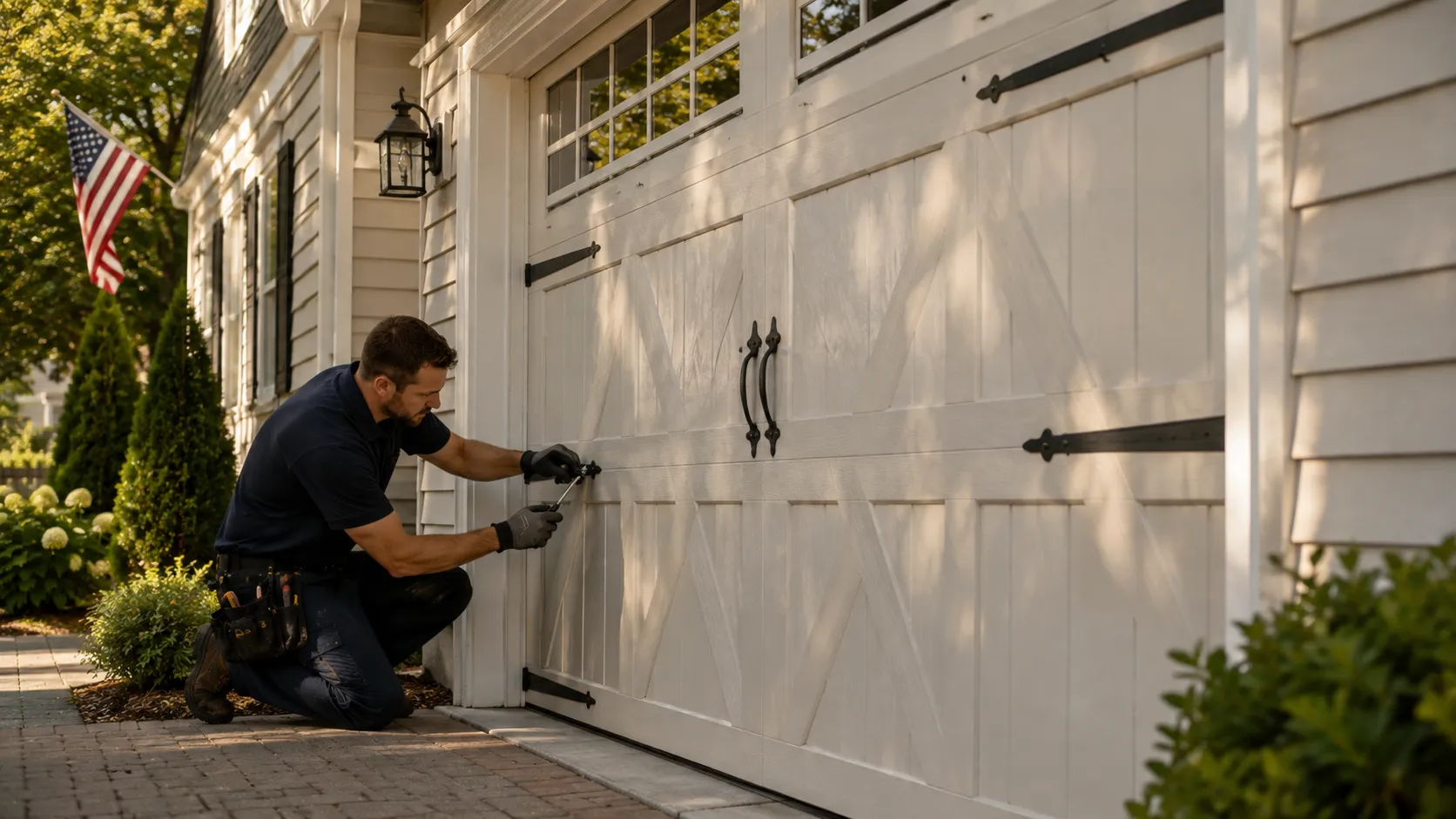
Not every sound needs a call today. A squeak that shows up only in the first cold snap and settles down once the door's been run a few times is usually just dry hardware - a $15 can of the right lubricant and a week's patience will tell you if that's all it was. A rattle that only happens on one specific panel, and stays put rather than spreading, is often just a loose fastener you can snug up yourself with a socket wrench.
We won't tell you to call for either of those, because you don't need us for either of those. Where we draw the line: if the noise is getting louder week over week, if it's paired with the door running unevenly on one side, or if you see a frayed cable, that's not a wait-and-see situation anymore. One honest limitation - we can't always tell you over the phone whether a noise is a $20 fix or a $400 one.
Torsion spring wear looks and sounds a lot like a bent track from a distance, and guessing wrong on that call costs you more than a look would have.
The Situation
Across the 45,207 households in this service area, 22,929 are owner-occupied houses, and a large share of those still carry the door hardware they were built with - hardware built for the 1960s and 70s, not for forty-plus years of daily cycles. With a median household income of $71,275 here, most homeowners we talk to would rather handle a spring or cable now, on their schedule, than wait for a Saturday morning failure with the car trapped inside. We work from Claycomo, four miles out, to Platte City, twenty miles the other direction, and the doors we see across that stretch - Gladstone, Kearney, Smithville, all of it - share the same era of hardware and the same cold-weather habits.
That's not a coincidence, it's just what got built when it got built. If your door is making a noise you haven't heard before, the honest first step is figuring out which decade of hardware you're dealing with, because that tells us more than the noise itself does.
How We Can Help
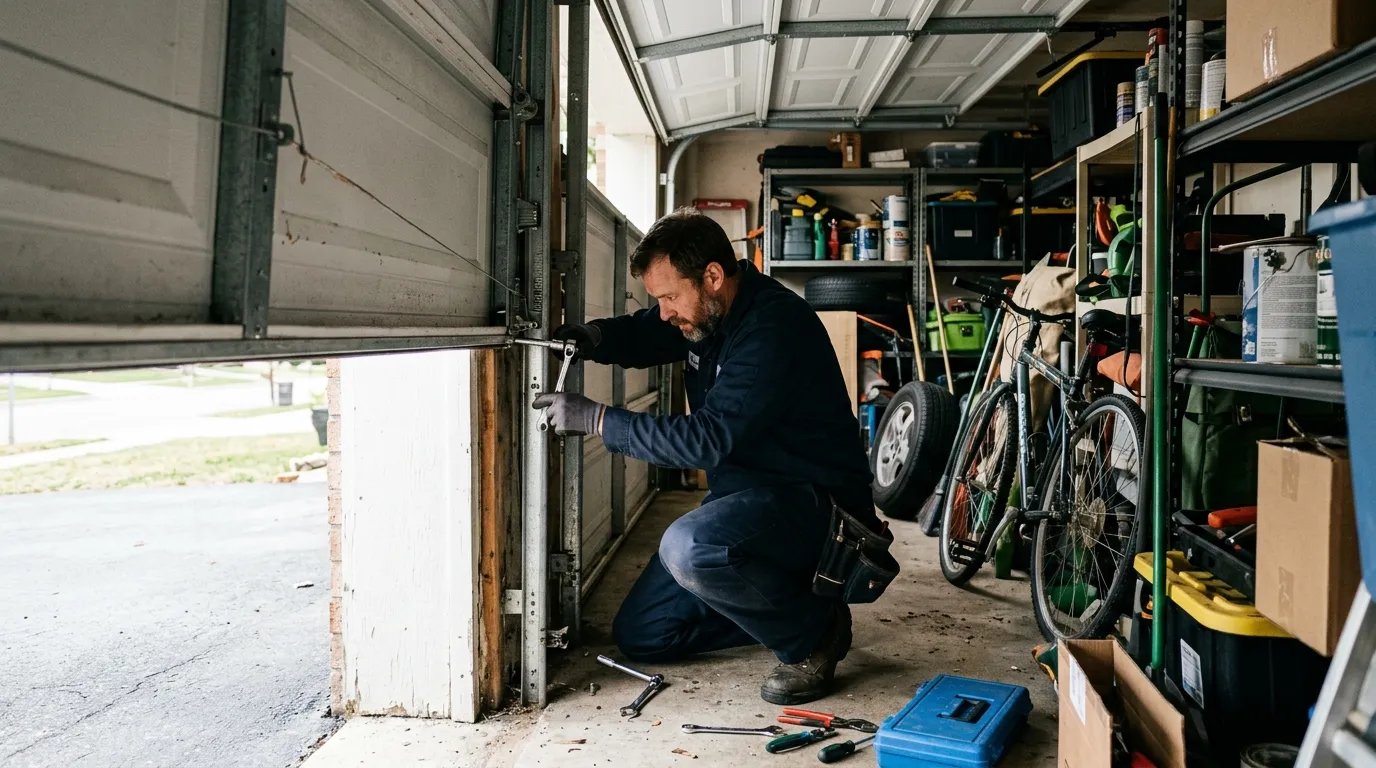
Garage Door Maintenance
Garage Door Maintenance handled by trained, insured local technicians with upfront pricing.
Learn more →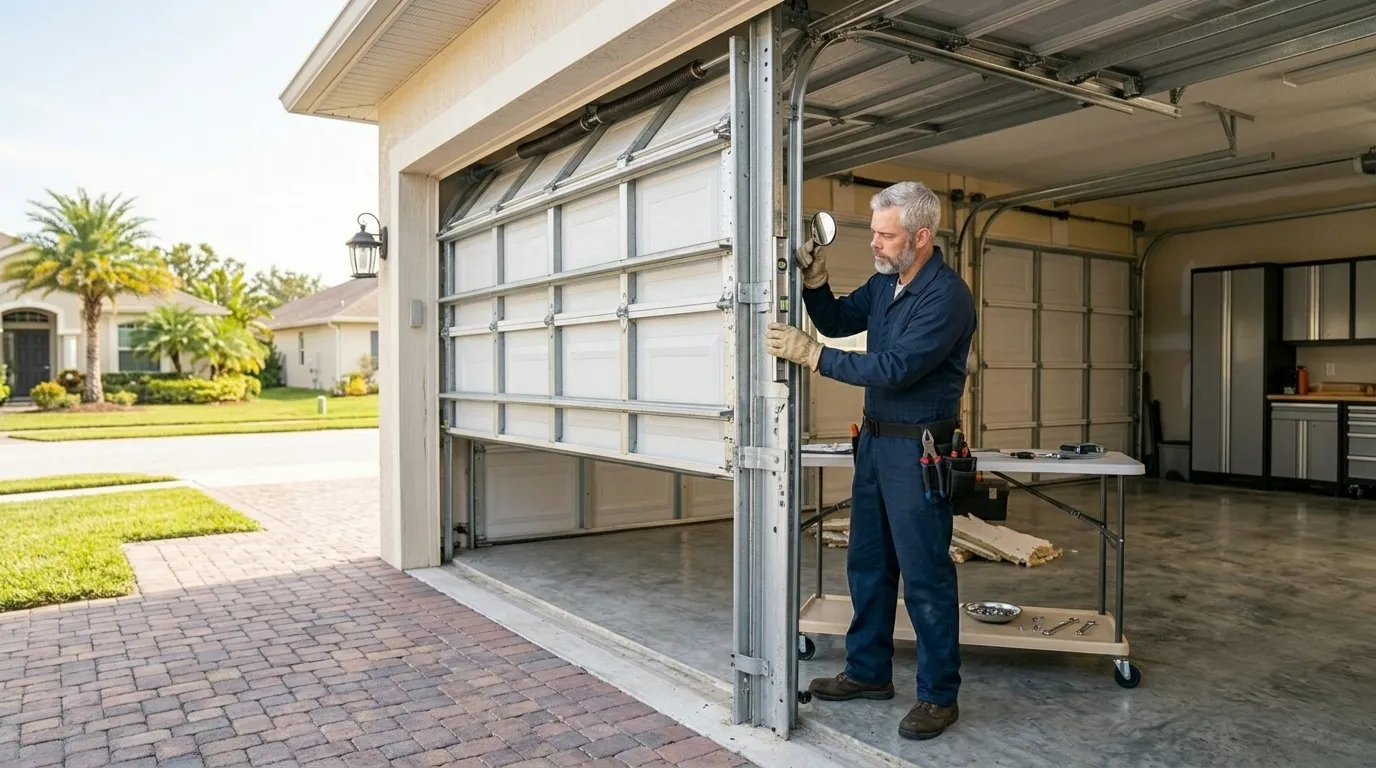
Garage Door Service
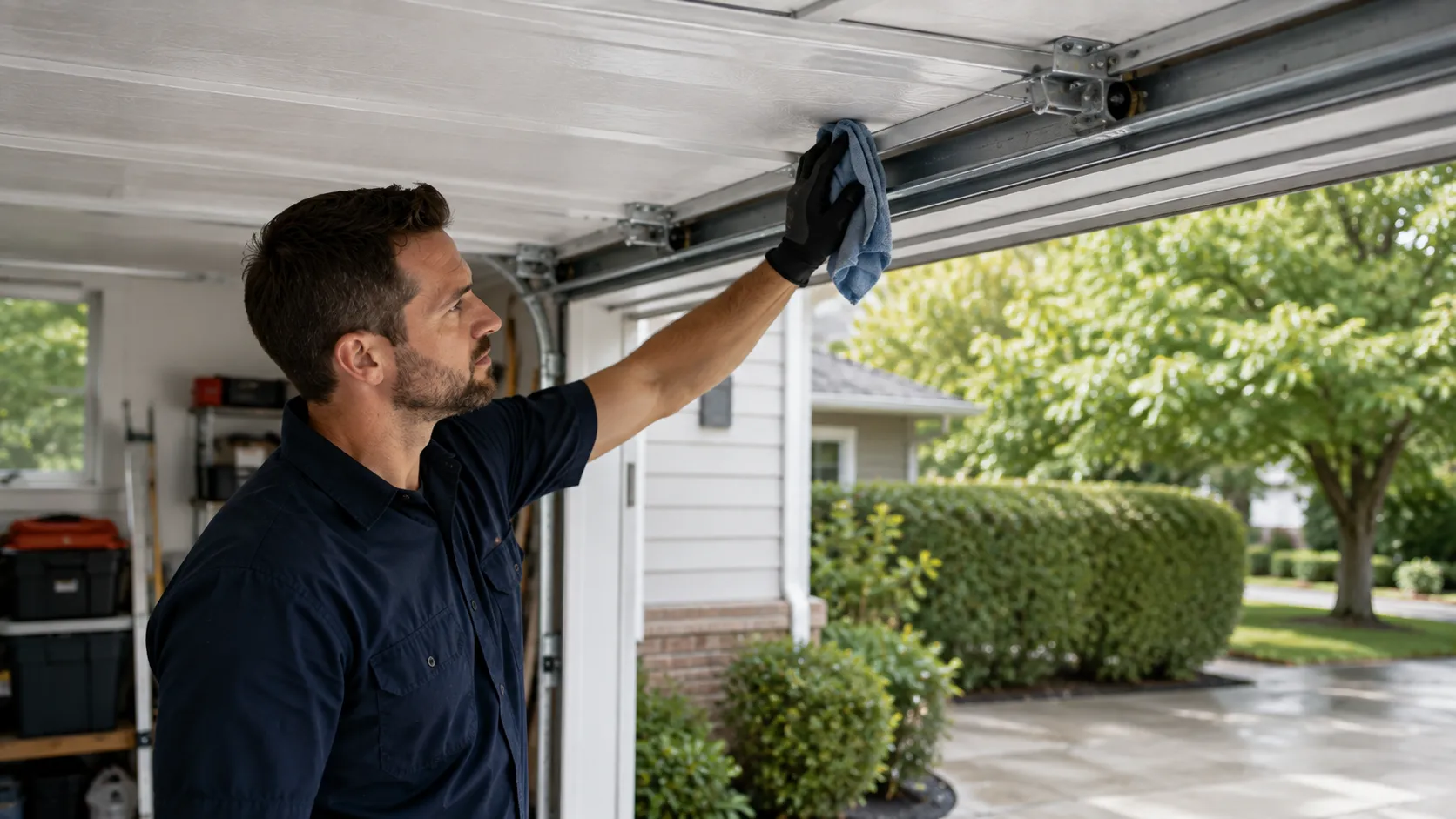
Tune-ups, lubrication, and safety checks that catch a small problem before it becomes a service call.
Learn more →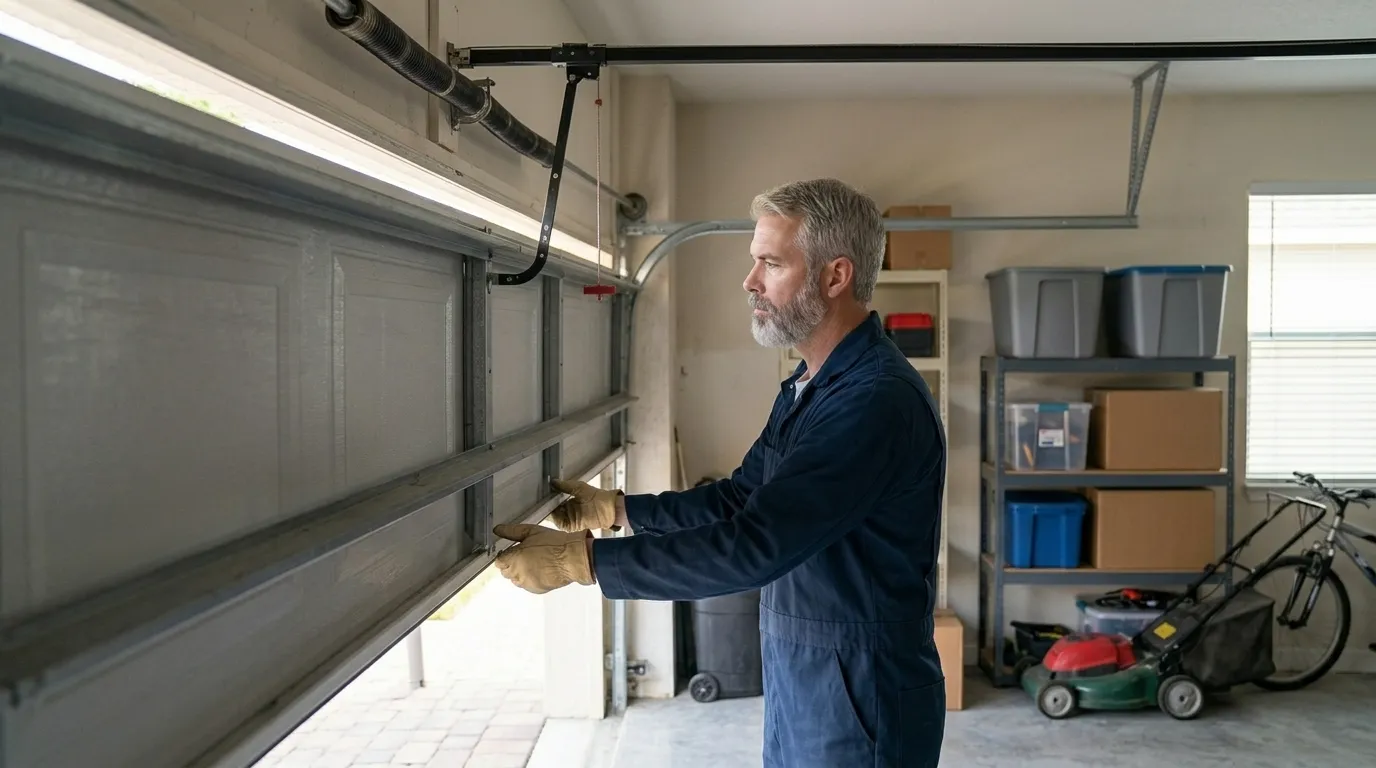
Garage Door Roller Replacement
Worn, noisy rollers swapped for smooth nylon ones so the door runs quiet.
Learn more →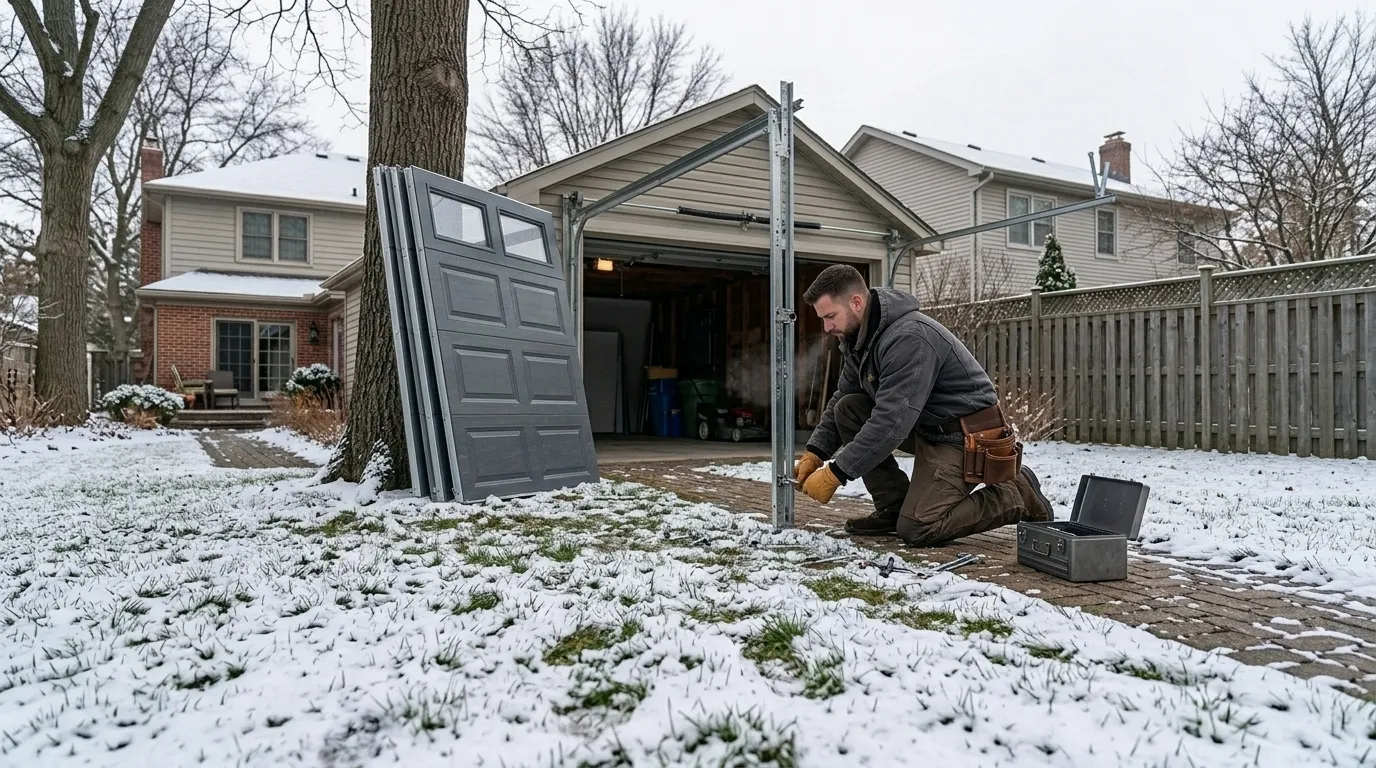
Garage Door Spring Repair
Broken torsion and extension springs replaced and the door rebalanced in the same visit.
Learn more →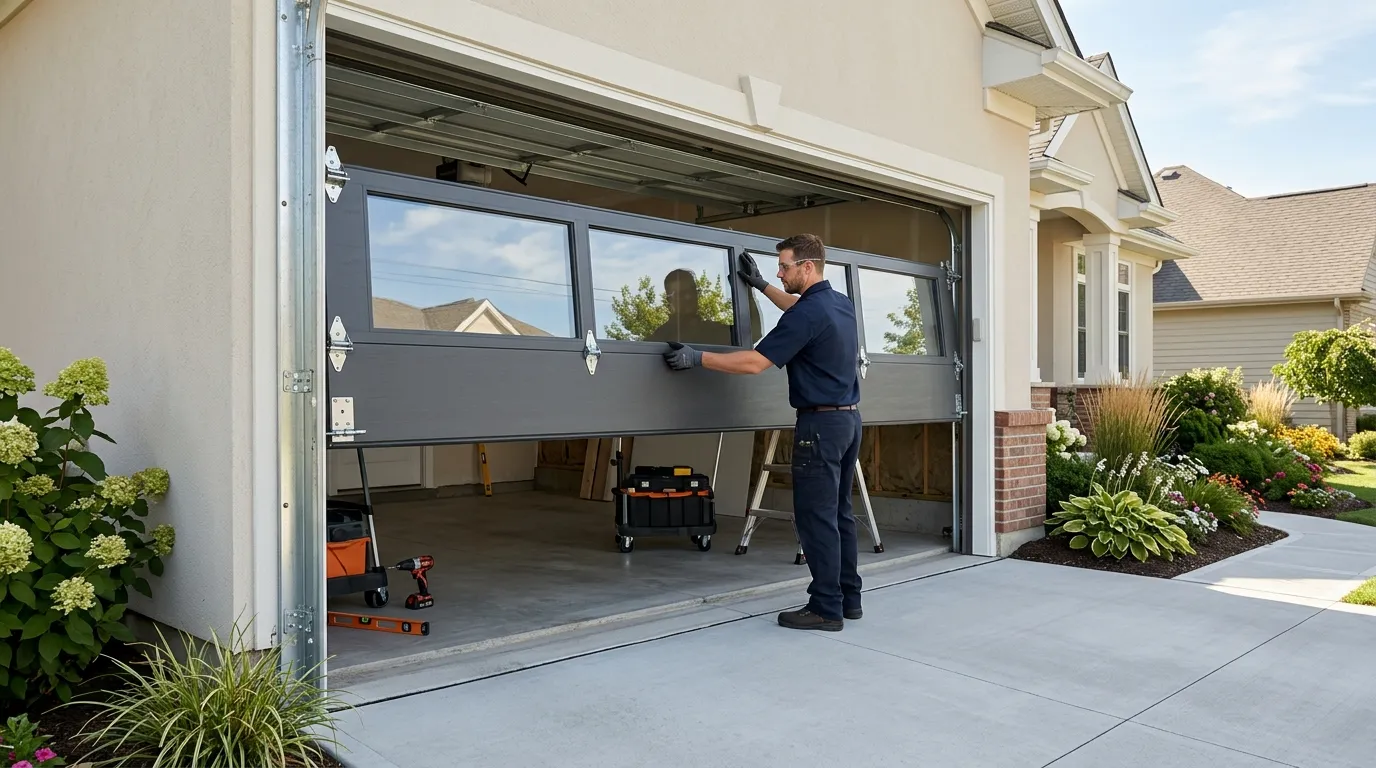
Garage Door Installation
New sectional doors sized and installed for the housing stock actually built in this area.
Learn more →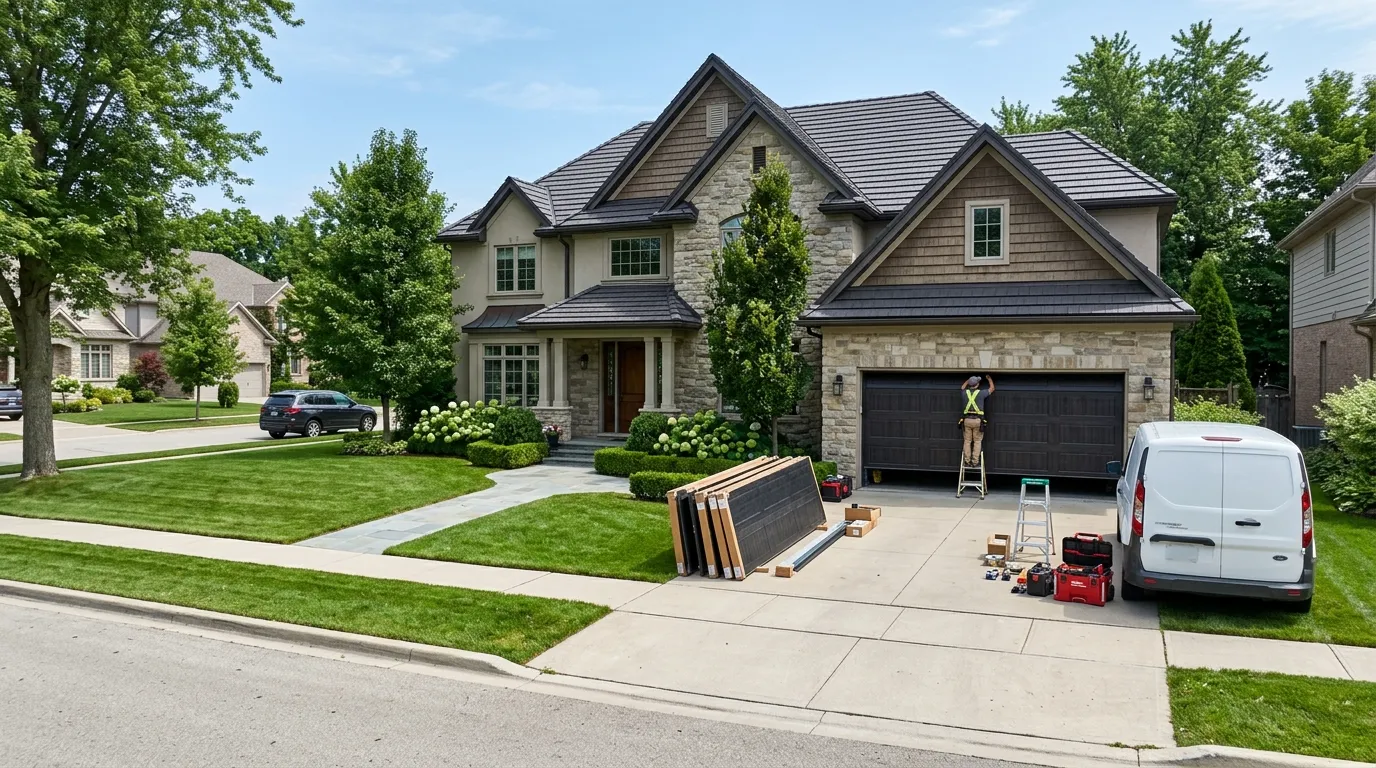
Garage Door Off Track
Doors that jumped the track reset safely, with rollers and alignment checked so it holds.
Learn more →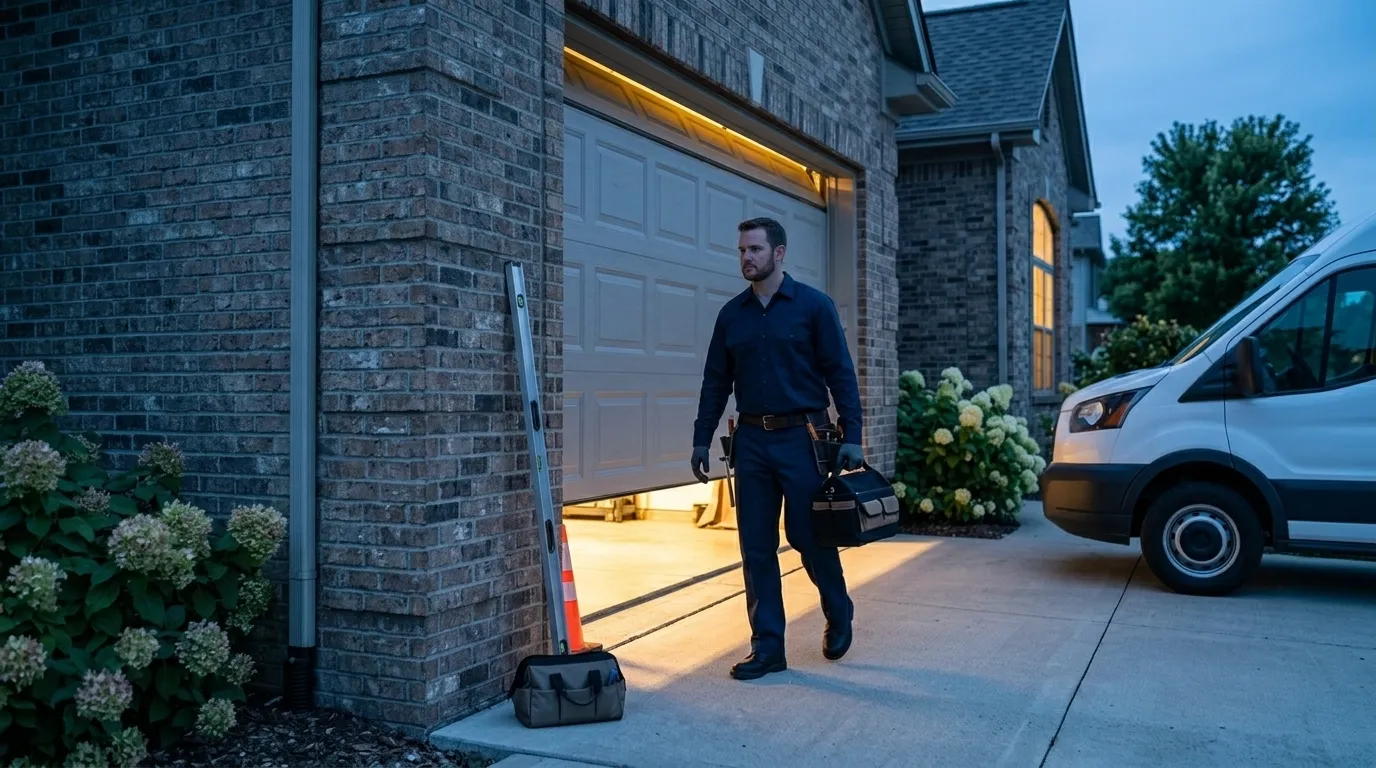
Garage Door Repair
Springs, cables, tracks, rollers, and openers fixed by a tech who explains the problem before touching anything.
Learn more →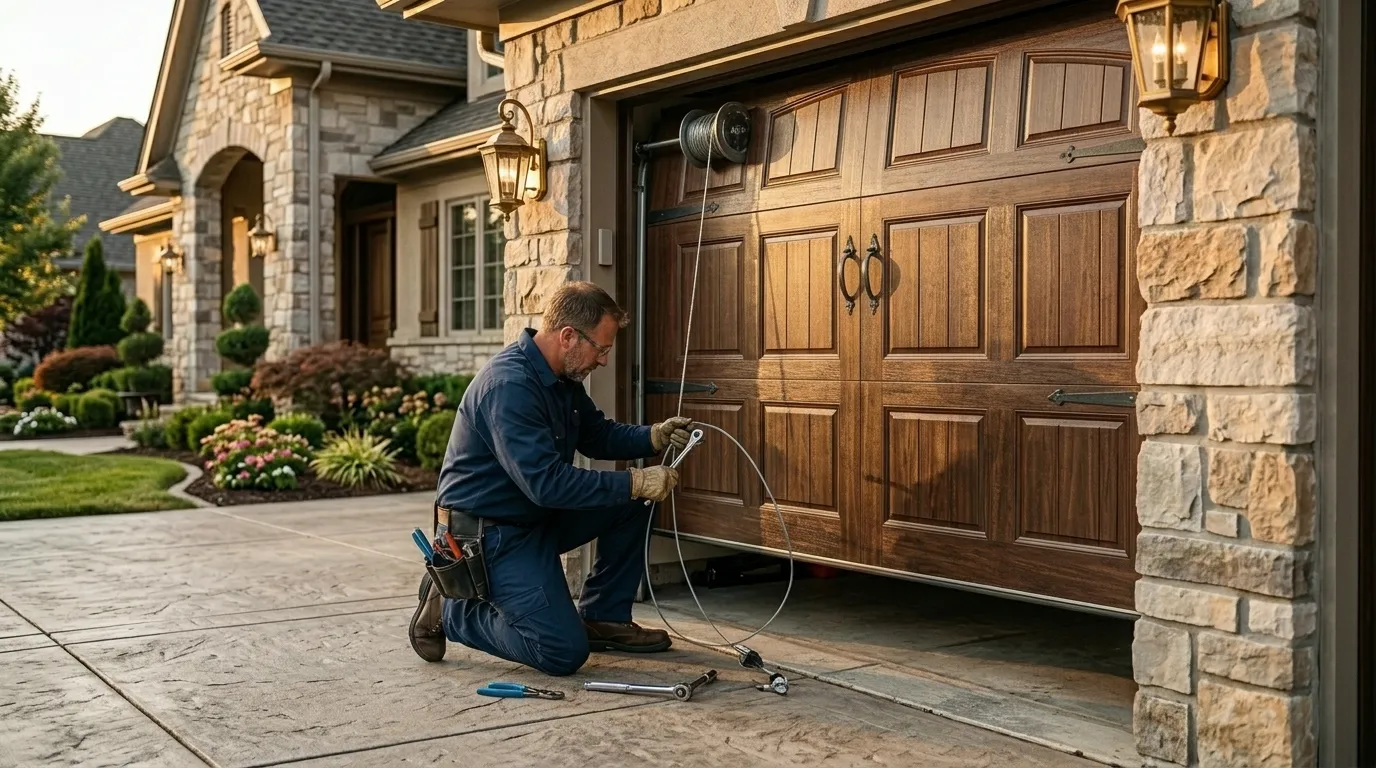
Garage Door Opener Repair
Openers that hum, stall, or reverse - diagnosed and fixed, from worn gears to logic boards.
Learn more →Frequently Asked Questions
My garage door squeaks every morning but works fine - do I need a repair?
Not necessarily. In Liberty's cold-moderate climate, dry hardware squeaks more in cold weather even when nothing's actually failing. Try a cold-rated lubricant on the rollers and hinges first. If the squeak fades within a week, that was the whole problem. If it gets louder or the door starts moving unevenly, that's a different situation and worth a look.
Is a loud bang from the garage always a broken spring?
Usually, yes, especially in houses from Liberty's 1960s-70s housing stock where original torsion springs are well past their rated cycle count. A bang followed by the door refusing to lift, or lifting only with heavy strain, points to a broken or badly worn spring. Don't try to open it manually until it's checked - a spring under partial tension is dangerous to handle.
Why does my door act up more in winter than summer?
Steel springs and cables contract in cold weather, and lubricant thickens right when the door needs it most - on that first cold-morning lift. In a cold-moderate climate like Liberty's, that's often what pushes an aging spring from 'a bit slow' to 'won't lift.' It's usually the last straw on hardware that was already near the end of its life, not a new problem on its own.
Have a Door That Needs a Second Opinion?
Call and describe what it is doing - we will tell you what it likely is.