
Liberty Garage Door Guide
Is Your Liberty Garage Door Worth Repairing, or Time to Replace It
Most Liberty homes were built between 1951 and 2002, and many still run original doors and hardware. Here's how to tell if yours is worth fixing or replacing.
- Licensed & Insured
- Same-Area Service Calls
- Upfront Pricing
When It Stops Being a DIY Job
Liberty's housing stock runs from 1951 to 2002, with the median build year landing in 1974. That puts a big share of doors in this town on original torsion hardware from a generation of manufacturing that doesn't match today's parts bins.
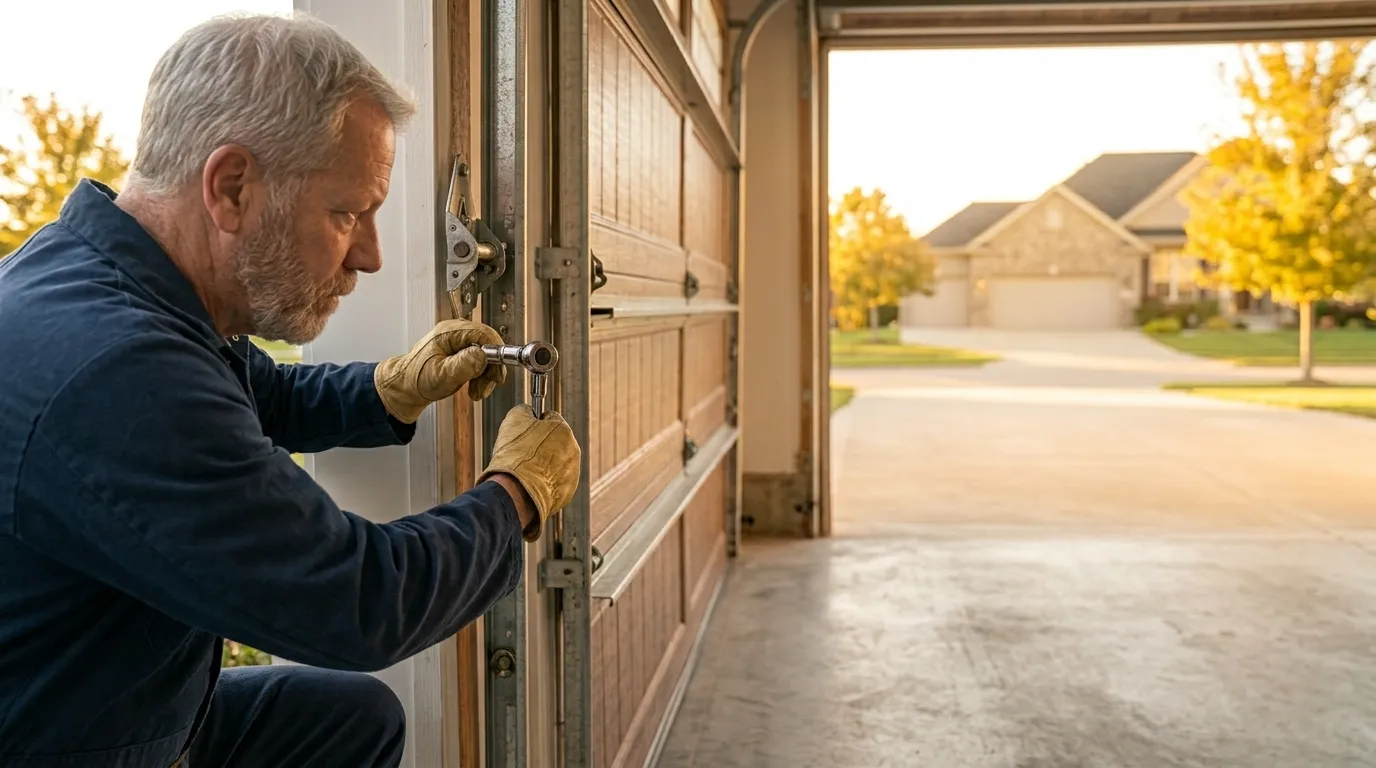
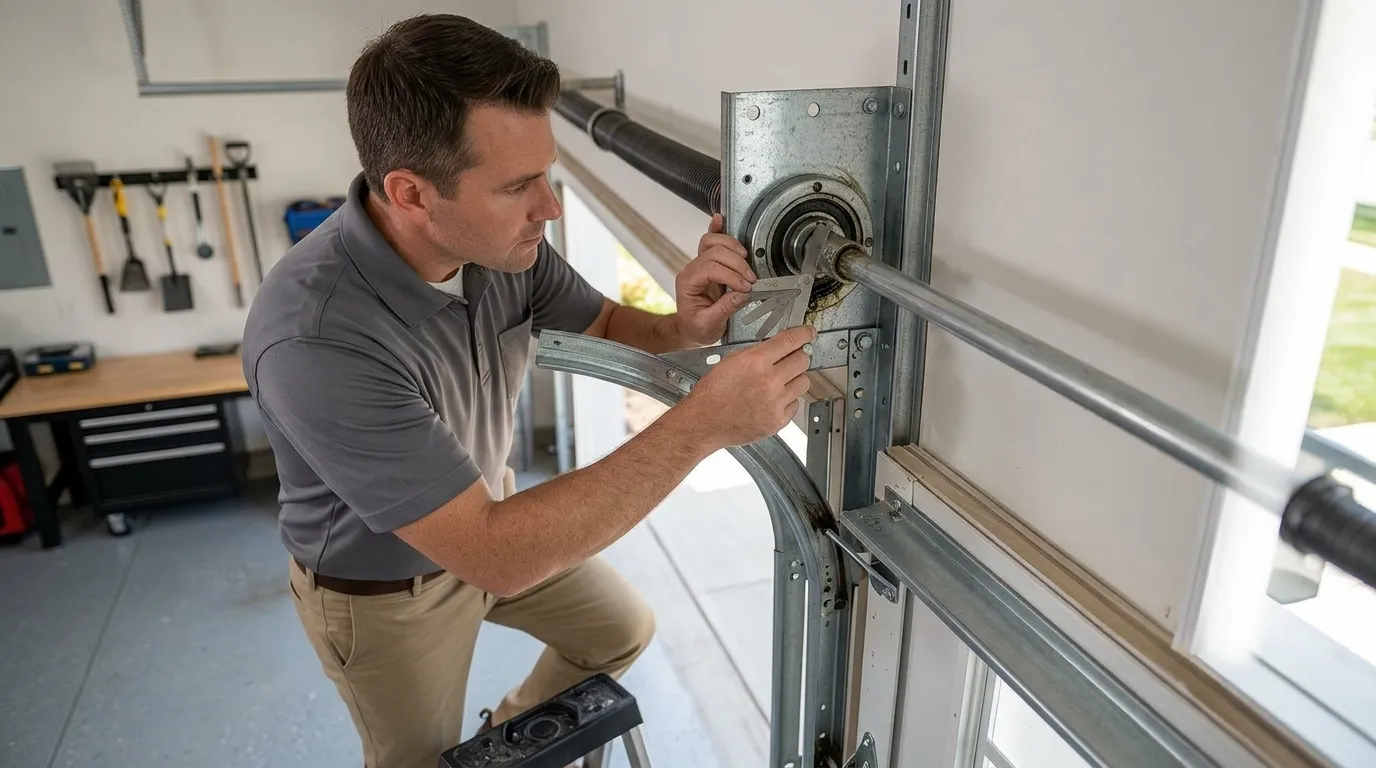
If you're pulling panels off a door from that era and the drums, end bearing plates, or cable drums look original, stop. A torsion spring under tension on 50-year-old brackets isn't a Saturday project - the spring can let go with enough force to break a hand or worse, and the mounting hardware from that build era wasn't engineered for the repeated stress of decades of cycling.
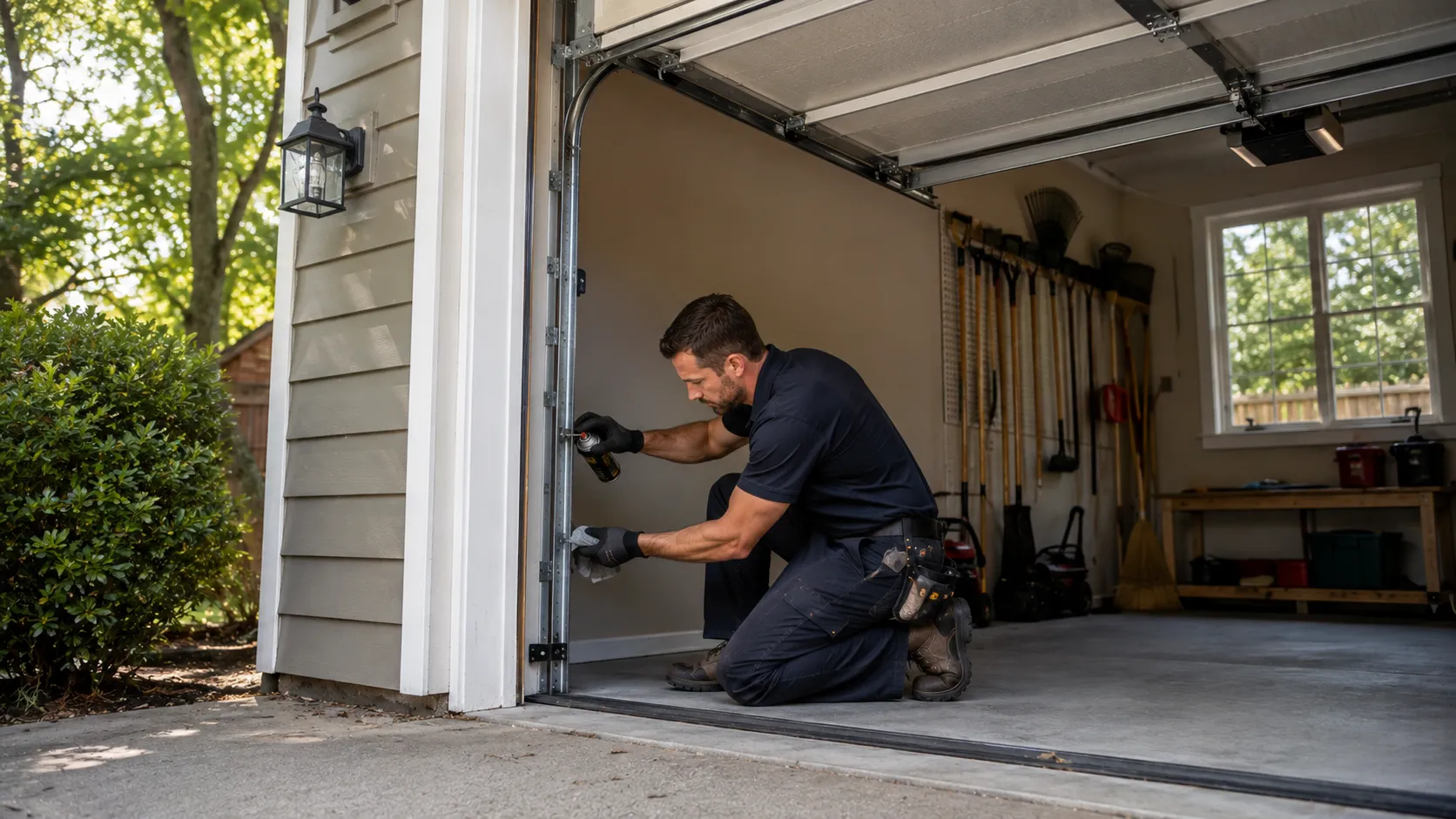
What you can handle yourself: lubricating rollers and hinges, tightening loose bolts on the track, swapping a broken remote battery, or replacing a worn weatherstrip at the bottom of the door. What belongs to a trained tech: spring replacement, cable work, anything involving the torsion bar, or realigning a track that's pulled away from the framing. Across the roughly 20 named areas that make up Liberty, most garage doors are original 1960s-70s installs on hardware nobody stocks new anymore, which means a repair often means sourcing or fabricating a part rather than grabbing one off a shelf.
What Local Conditions Do
Liberty sits in a cold-moderate climate band, so freeze-thaw cycles work on steel tracks and torsion springs every winter. Metal contracts in the cold, and if a track was installed even slightly out of plumb decades ago, that contraction shows up as binding or a door that jumps its rollers on the coldest mornings of the year. Lubricant that was fine in July gums up in January and adds resistance right when the opener is already working harder against stiff springs.
This matters more in a town where the housing stock skews older. A door installed new in the 1970s has been through fifty-plus freeze-thaw cycles, and steel fatigues. Springs lose tension faster in cold climates than manufacturers' charts (written for moderate conditions) suggest, which is part of why a door that felt fine last spring can suddenly feel heavy going into winter.
Weatherstripping on original doors also hardens and cracks with repeated cold exposure, letting in more draft than the door was ever designed to. None of this is unique to any one house - it's a function of age plus climate, and in Liberty you generally have both working against the same doors at once.
When Waiting Is Fine
Not every issue on an older door needs a call this week. A squeaky hinge, a slightly noisy roller, or minor surface rust on a steel panel that hasn't broken through the coating can wait for a scheduled visit rather than an emergency one. If your door still opens and closes on a full cycle without grinding, catching, or reversing unexpectedly, and the spring still has visible coil tension, you likely have weeks, not days.
Here's the honest limitation: if a door was installed after the early 1990s using galvanized hardware and a factory-torsion spring rated for the panel weight, a lot of what looks like wear is cosmetic and doesn't justify full replacement. We'd rather fix the actual failure point - a bent roller, a frayed cable - than sell a new door to someone whose door has another decade left in it. Waiting is also fine if the only symptom is noise.
Noise is annoying, not dangerous, and it's usually a five-minute fix. Waiting stops being fine the moment the door won't stay up on its own, because that's the spring telling you it's near the end.
The Situation
With 22,929 owner-occupied houses out of 45,207 households in the service area around Liberty, a large share of the garage doors in this stretch of Missouri are original to homes built decades ago. A median household income of $71,275 in Liberty means most owners can afford a full replacement when a repair no longer makes sense, but plenty still choose to fix first - and for a door with sound hardware, that's usually the right call. The mix of 1960s and 70s builds spread across the roughly 20 named areas here, from Claycomo four miles out to Platte City twenty miles north, means the same repair-versus-replace math plays out house after house on this side of the metro.
The short version: age alone doesn't condemn a door. What matters is whether the spring still holds tension, whether the track is straight, and whether the panels are structurally sound under the surface rust.
If those three hold up, a repair is usually the cheaper and faster answer. If two of the three are gone, you're paying repair prices to delay a replacement you'll need anyway.
How We Can Help
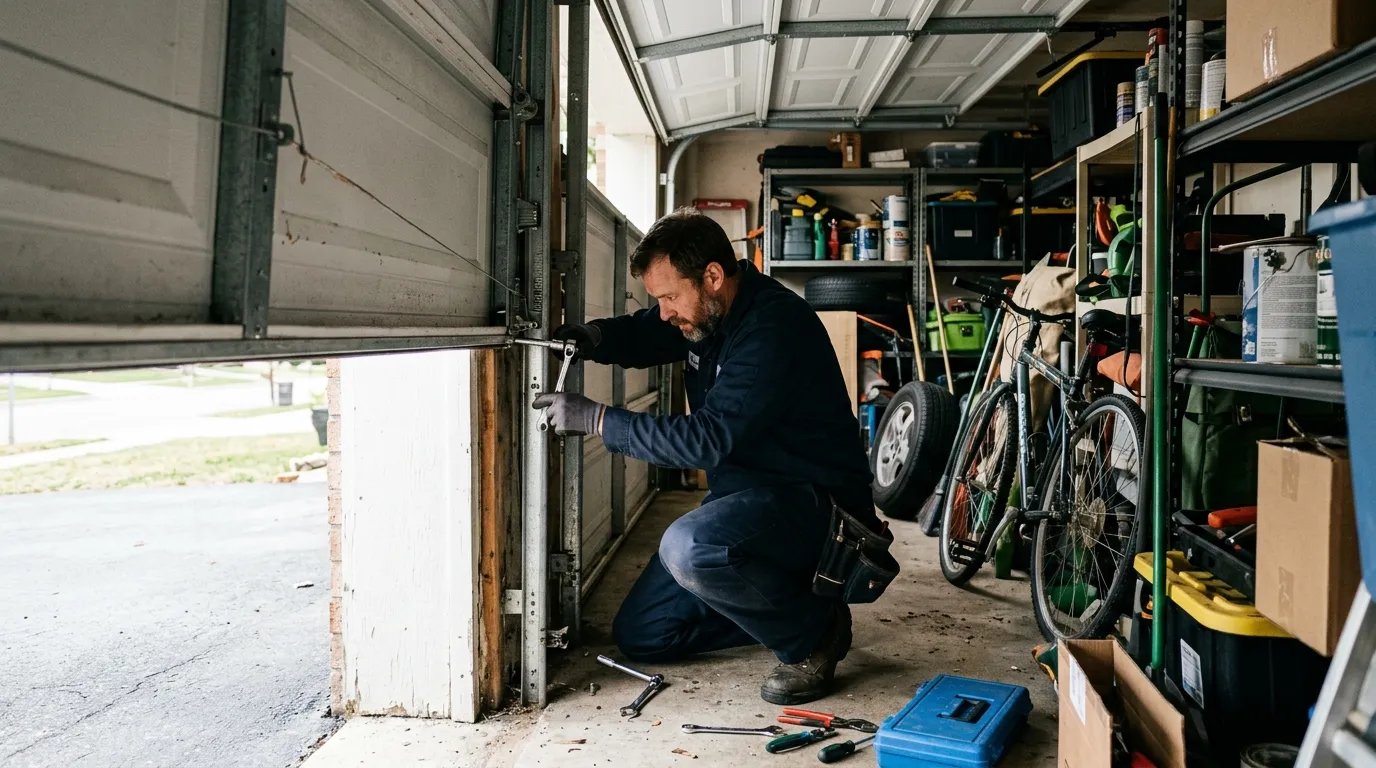
Garage Door Maintenance
Garage Door Maintenance handled by trained, insured local technicians with upfront pricing.
Learn more →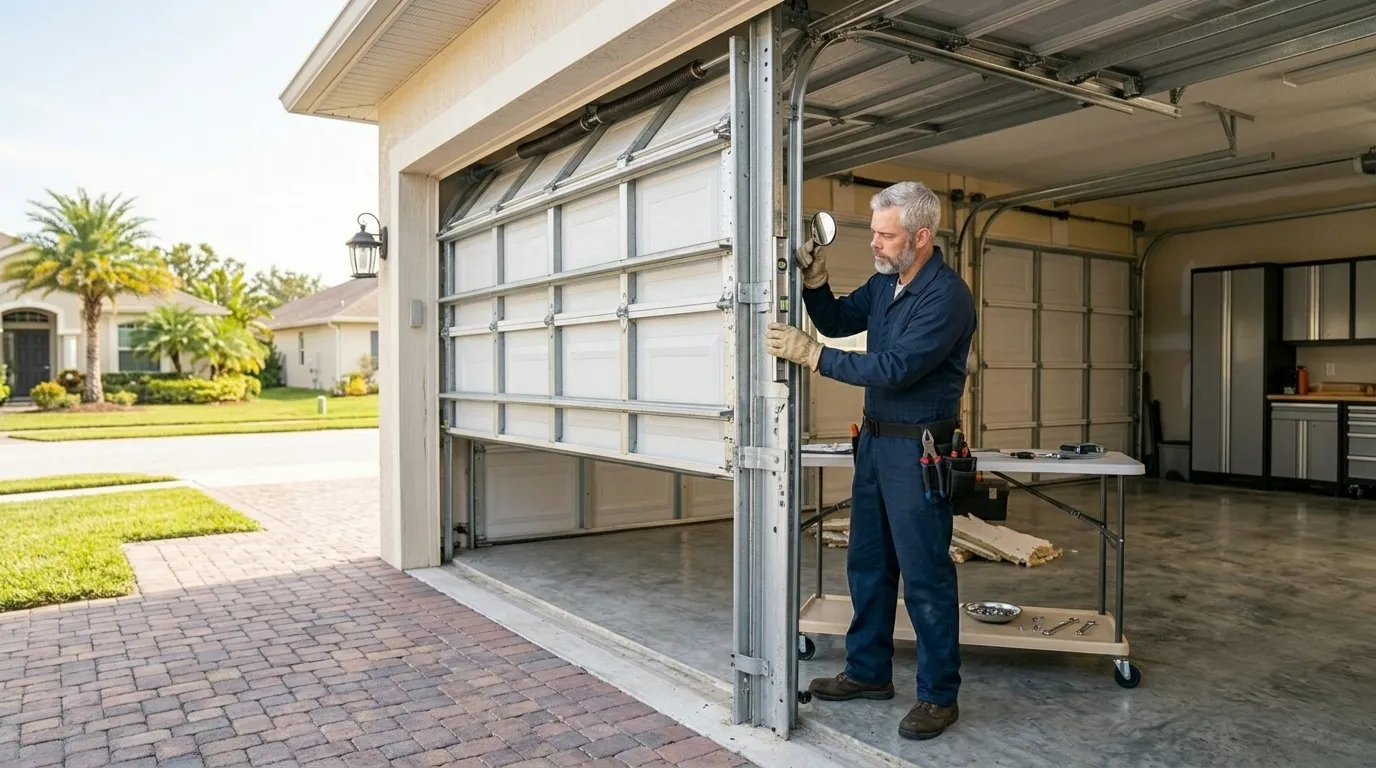
Garage Door Service
Tune-ups, lubrication, and safety checks that catch a small problem before it becomes a service call.
Learn more →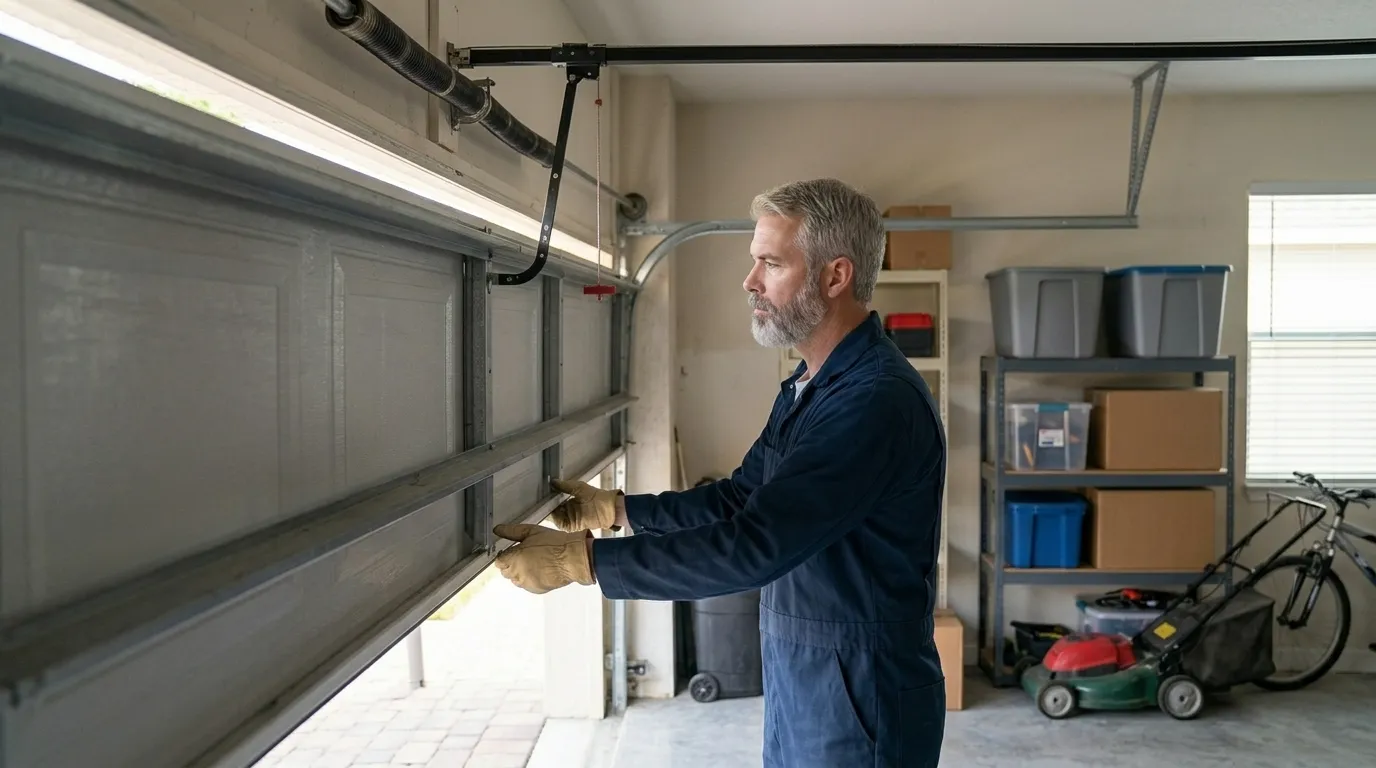
Garage Door Roller Replacement
Worn, noisy rollers swapped for smooth nylon ones so the door runs quiet.
Learn more →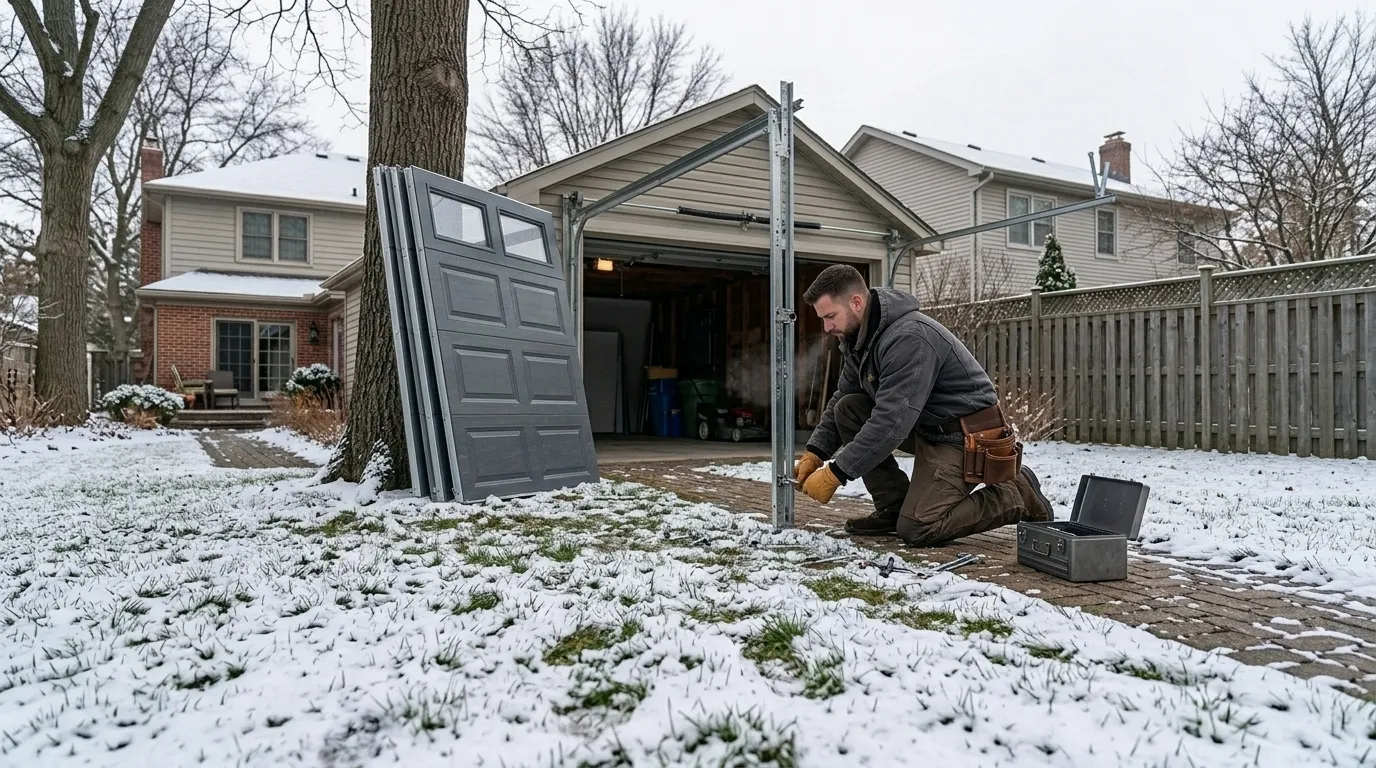
Garage Door Spring Repair
Broken torsion and extension springs replaced and the door rebalanced in the same visit.
Learn more →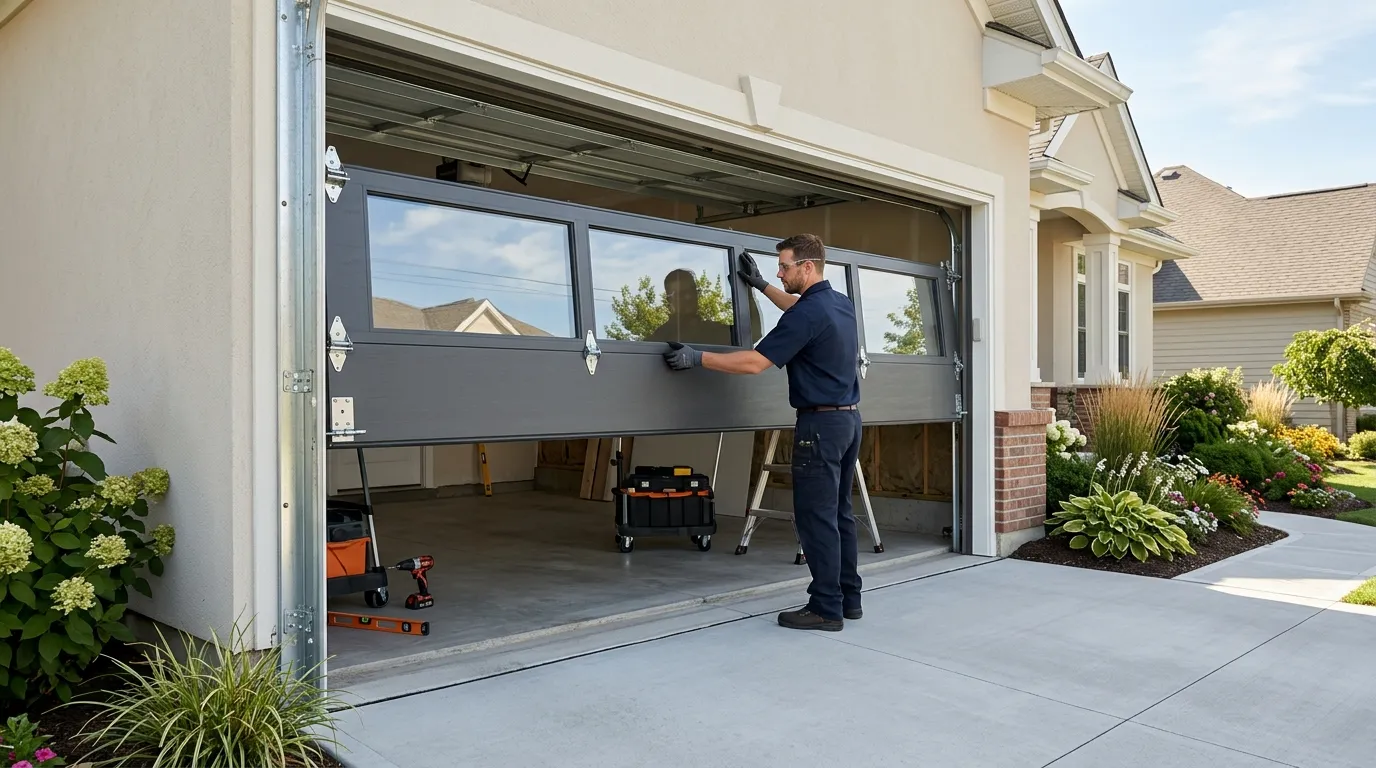
Garage Door Installation
New sectional doors sized and installed for the housing stock actually built in this area.
Learn more →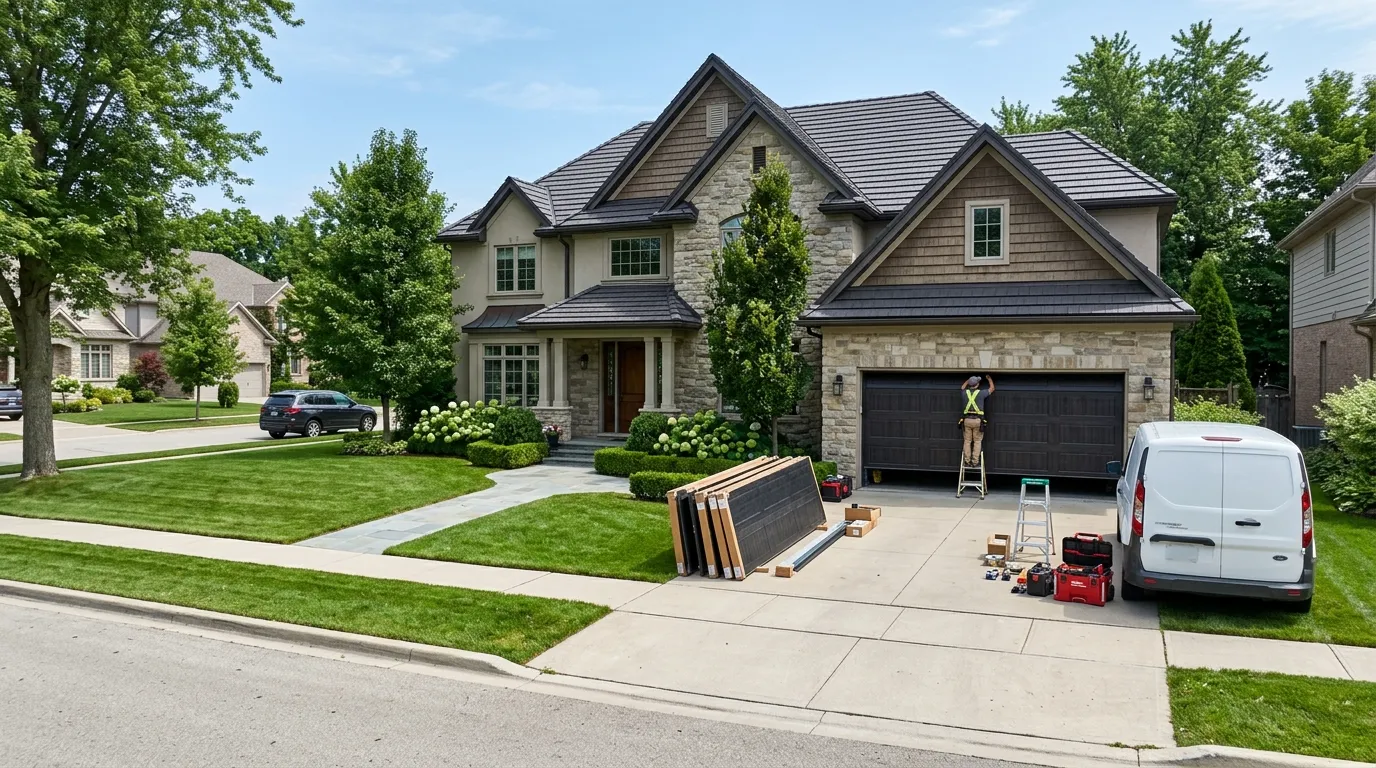
Garage Door Off Track
Doors that jumped the track reset safely, with rollers and alignment checked so it holds.
Learn more →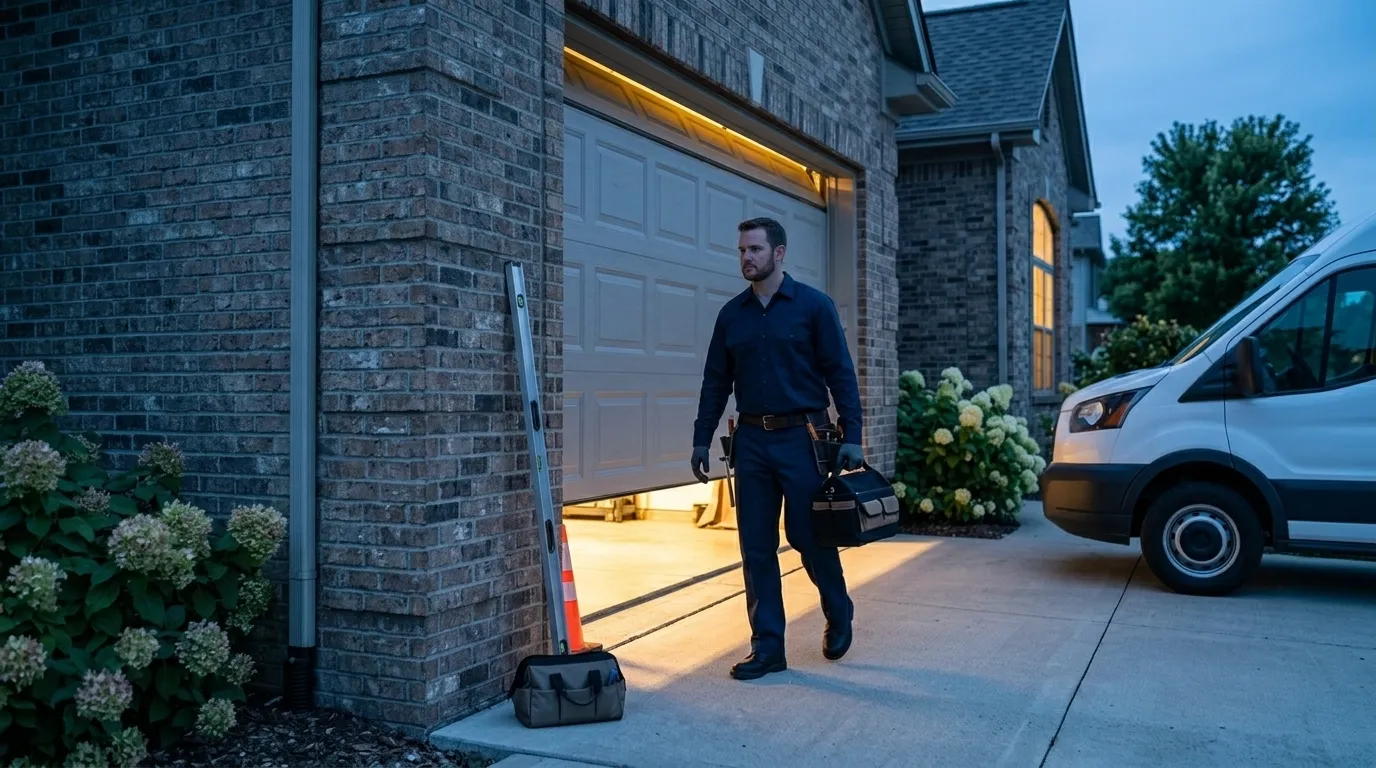
Garage Door Repair
Springs, cables, tracks, rollers, and openers fixed by a tech who explains the problem before touching anything.
Learn more →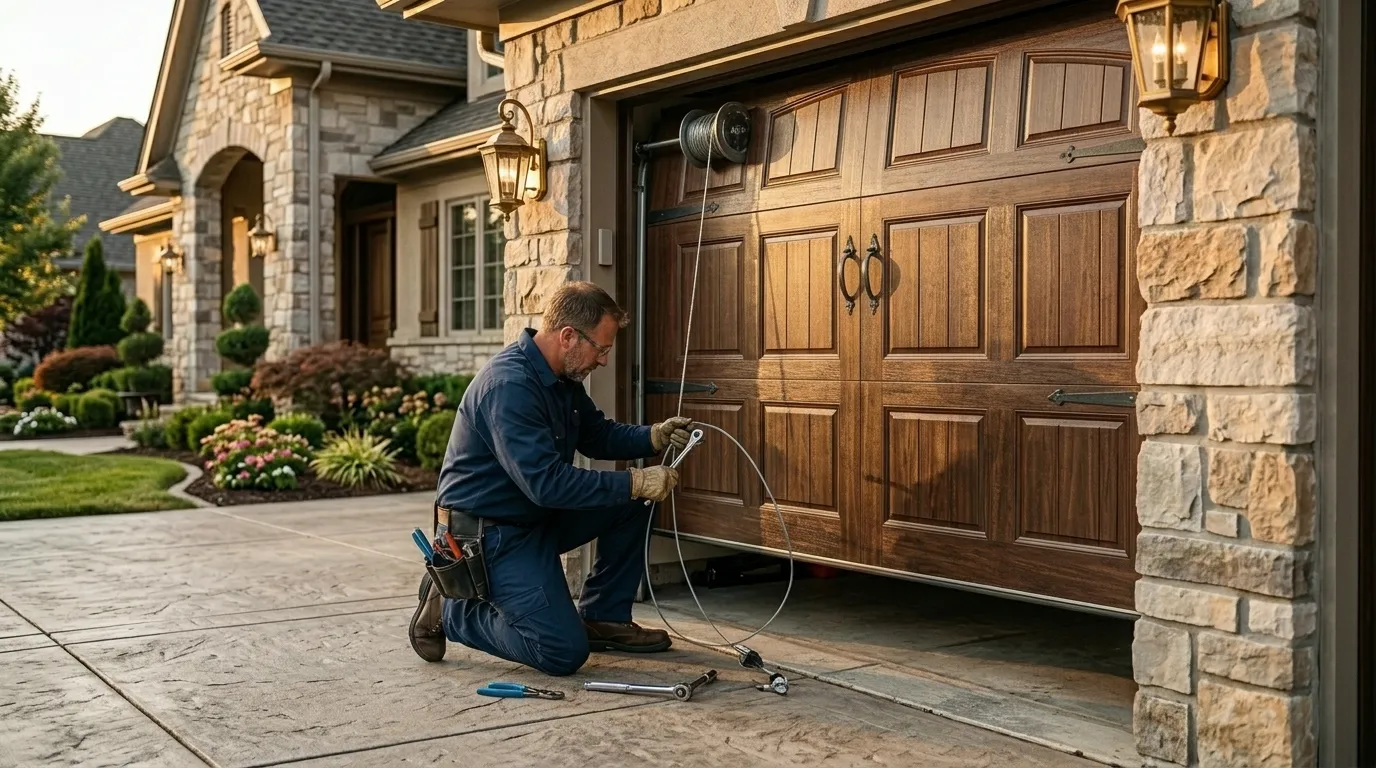
Garage Door Opener Repair
Openers that hum, stall, or reverse - diagnosed and fixed, from worn gears to logic boards.
Learn more →Frequently Asked Questions
How do I know if my garage door spring is original to the house?
If your Liberty home was built in the 1960s or 70s and the spring has never been replaced, it's likely original or close to it. Look for heavy oxidation, a spring that looks stretched even at rest, or a door that's noticeably harder to lift by hand than it used to be. A tech can confirm by checking the wire gauge and coil count against the panel weight.
Does cold weather really affect an older garage door that much?
Yes. Liberty's cold-moderate climate means steel tracks and springs go through repeated freeze-thaw cycles every winter, and metal that's already fatigued from decades of use handles that stress worse than newer hardware. A door that's been fine for years can suddenly bind or feel heavy once temperatures drop.
Is it ever worth replacing a door that still works?
Sometimes. If your door dates to the original 1960s-70s build era and the hardware is original, a repair might buy you a year or two before the next failure. If you're already facing a spring and cable job, it's worth asking whether a full replacement gets you further for close to the same money.
Have a Door That Needs a Second Opinion?
Call and describe what it is doing - we will tell you what it likely is.